
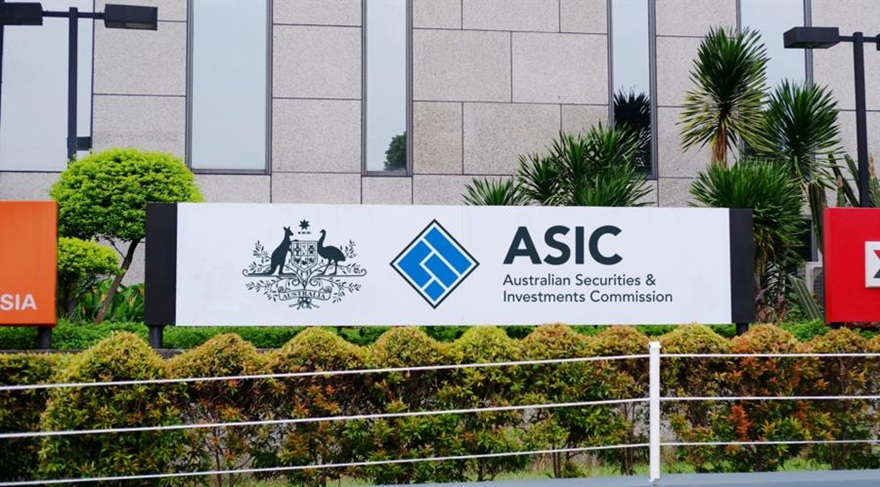
Former Queensland property developer Ian Omar Chester has been sentenced to nine years in prison after admitting to dishonestly diverting more than A$2.2 million of investor money from a network of property development companies.
Chester pleaded guilty in the Southport District Court on September 29 following a multi-year investigation by the Australian Securities and Investments Commission. He will become eligible to apply for parole after serving three years.
The case involved approximately 18 companies controlled by Chester and used as investment or development vehicles across five property projects in Southeast Queensland. Those projects raised money from 190 investors, many of whom invested through self-managed superannuation funds, or SMSFs.
ASIC said Chester dishonestly applied more than A$2.2 million for his own benefit or that of other parties. The conduct included falsifying investor authorities to obtain the release of funds that had been committed for specific investment purposes.
Some of the money was transferred into accounts held in Chester’s name, while other funds were used to meet debts he had personally incurred.
Investors Were Told One Project Was Still on Track After Its Land Had Been Sold
One of the more striking details presented to the court concerned information supplied to an investor about a property project that could no longer proceed as represented.
According to ASIC, Chester knew the land connected to one development had already been sold to an unrelated party. Despite that, he caused an investor to receive information indicating that the development remained on track. The investor subsequently put money into the project.
The sentencing court also heard directly about the consequences for investors.
Judge Prskalo KC considered 17 victim impact statements and described the conduct as “sustained and deliberate dishonesty.” The judge accepted that investors had suffered “real harm” and noted that using investor funds to meet creditors of unrelated projects was economically comparable to using the money personally.
ASIC Chair Sarah Court said investors had entrusted Chester with millions of dollars for property development, but substantial amounts were ultimately diverted away from the purposes represented to them.
The Commonwealth Director of Public Prosecutions prosecuted the case following ASIC’s investigation.
The Case Began With Asset-Freezing Action in 2021
The September 29 sentence closes a criminal case whose regulatory history stretches back more than five years.
ASIC first went to court in July 2021 seeking to preserve assets connected with Chester and associated entities after raising concerns that investor money from some developments had been used for Chester’s benefit or for purposes other than those originally represented.
The Supreme Court of Queensland made orders restricting dealings with assets and bank accounts. Around the same period, companies associated with the development group entered liquidation or administration.
Chester was later declared bankrupt in July 2022.
In December 2023, he appeared before Southport Magistrates Court after being charged with multiple fraud offences, falsification of company books and allegations of providing false or misleading information to members of a corporation.
The matter then proceeded through the courts before his guilty plea and sentencing on September 29, 2026.
Under Queensland law, aggravated fraud covers circumstances that make an offence more serious, including where the amount involved reaches at least A$100,000 or the offender is found to be carrying on a business of committing fraud.
Superannuation Money Makes the Investor Harm More Significant
The use of SMSF money is one of the most important parts of the Chester case for retail investors.
Superannuation capital is generally intended to fund retirement. When an investor moves that money into a private property development, the risk can become concentrated in a single project, developer and corporate structure rather than diversified across a broader retirement portfolio.
The Chester case was not simply about a project performing badly or property values falling. The court dealt with dishonest use of money that investors had provided for defined purposes.
That distinction is critical. Investment loss is an ordinary part of taking risk. Diverting capital away from the stated investment is a governance and fraud issue.
It also illustrates why checking regulatory status, corporate records and the exact entity receiving investor money can matter before capital is transferred. A legitimate-looking project, company structure or marketing document does not by itself establish how investor money will ultimately be controlled.
Chester Is Not an Isolated Gold Coast Property Enforcement Case
The sentence also sits within a wider pattern of ASIC enforcement involving privately raised money for property developments.
In August 2025, former Gold Coast property developer Michael David Steele was sentenced to eight years in prison after pleading guilty to fraud involving more than A$1.3 million from 14 investors.
ASIC said those investors had been encouraged to use superannuation and other savings to fund a Biggera Waters development. Instead, Steele used money for purposes including a residential property, vehicles, jewellery, university fees, travel, entertainment and online gambling. None of the investment money was repaid to investors, according to ASIC.
In another ongoing case, property developer David McWilliams was charged in June 2026 over an alleged A$10.1 million misuse of investor money originally intended for specialist disability accommodation projects. McWilliams has been charged, not convicted, and those allegations remain to be determined by the court.
These cases differ in their facts, but all raise the same basic investor question: once money leaves an investor’s account, what controls ensure it can only be used for the project that was sold to them?
The Real Risk Is Often Control of the Money, Not the Property
For investors, the most useful lesson from the Chester case is not that property development itself is unusually dangerous.
It is that the economic quality of a project and the governance surrounding investor cash are two separate risks.
A development may look attractive on paper: valuable land, strong local demand, projected margins and an experienced promoter. None of those factors protects an investor if one person can redirect capital between companies, use it to service unrelated liabilities or obtain funds using falsified approvals.
This is where legal structure becomes more important than marketing.
Who controls the bank account? Are investor funds segregated by project? Can money be moved between related companies? Is an independent trustee, custodian or administrator involved? What reporting does the investor receive, and can project milestones be independently verified?
Similar principles apply across financial markets. Strong regulatory protections matter partly because they establish rules around governance, disclosure and who is responsible for customer money. When a regulated financial company fails, formal processes for returning client assets can at least create a defined framework for reconciliation and recovery.
Property-development investors may not always have an equivalent safety net, particularly where they are making direct or privately structured investments.
Asset Freezes Help Preserve Money but Cannot Guarantee Recovery
ASIC’s decision to seek asset-preservation orders in 2021 shows another important feature of financial enforcement: regulators often have to act long before a criminal case reaches sentencing.
Freezing assets can stop money or property from being moved while investigators establish what happened. Liquidators can then examine company records, trace transactions and assess potential recoveries.
But neither an asset freeze nor a later prison sentence guarantees that investors will be made whole.
By the time fraud is discovered, money may already have been spent, transferred, used to pay creditors or mixed with the finances of related entities. That makes prevention far more valuable than recovery.
The same principle explains why financial companies increasingly invest in fraud controls designed to stop suspicious transactions before funds leave the system. Once money has moved, legal and forensic recovery can become slow, expensive and incomplete.
For Chester’s investors, the criminal process has now produced a clear result: a guilty plea and a nine-year sentence.
The broader investment lesson is less satisfying. A project can have companies, contracts, land and professional-looking documentation and still expose investors to a much simpler risk — whether the person controlling the money actually uses it for the purpose they promised.
That is why due diligence on a private investment should extend beyond whether the underlying asset looks attractive. Investors also need to understand the structure surrounding the cash, the people able to move it and the protections available if those controls fail.

Shane Neagle is a financial markets analyst and digital assets journalist specializing in cryptocurrencies, memecoins, prediction markets, and blockchain-based financial systems. His work focuses on market structure, incentive design, liquidity dynamics, and how speculative behavior emerges across decentralized platforms.
He closely covers emerging crypto narratives, including memecoin ecosystems, on-chain activity, and the role of prediction markets in pricing political, economic, and technological outcomes. His analysis examines how capital flows, trader psychology, and platform design interact to create rapid market cycles across Web3 environments.
Alongside digital assets, Shane follows broader fintech and online trading developments, particularly where traditional financial infrastructure intersects with blockchain technology. His research-driven approach emphasizes understanding why markets behave the way they do, rather than short-term price movements, helping readers navigate fast-evolving crypto and speculative markets with clearer context.