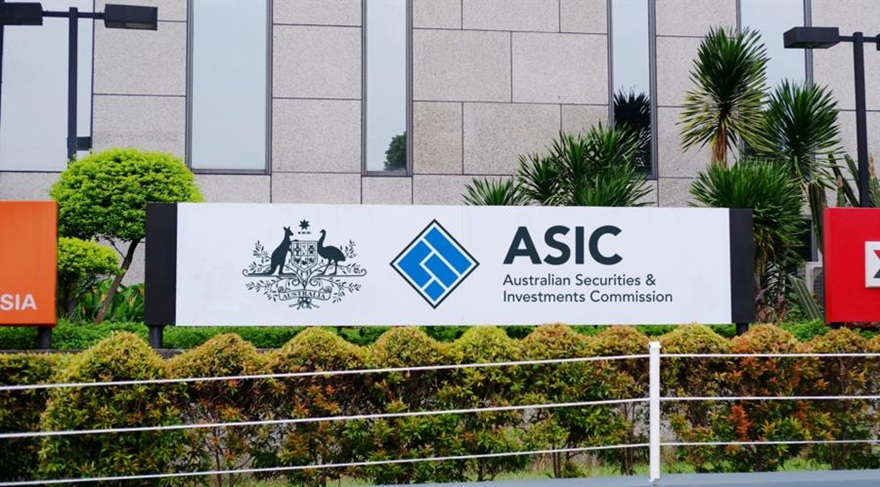
ASIC Keeps Foreign-Market Record Relief in Place for Another Five Years
Australia’s securities regulator has extended a long-running exemption covering certain records of transactions executed on overseas financial markets, preserving a compliance framework that can matter to Australian financial-services licensees operating across borders.
The Australian Securities and Investments Commission confirmed on September 28 that it had remade three financial-market relief instruments for another five years, including ASIC Corporations (Records: Dealings on Foreign Markets) Instrument 2026/755.
The instrument was registered on September 15 and replaces the previous 2016/889 instrument that was approaching its statutory sunset date. The new version is scheduled to remain in force until October 1, 2031.
For internationally active financial firms, the important point is continuity rather than deregulation.
Regulation 7.8.19 of Australia’s Corporations Regulations normally requires an Australian financial services licensee to retain records of instructions to deal in financial products through licensed or foreign financial markets. Those records can include details of the instruction, the client, who provided and received the instruction, and the timing of its receipt, transmission and execution.
The remade instrument exempts a licensee from those specific requirements where two conditions are met: the instruction comes from or on behalf of a wholesale client outside Australia, and the transaction is carried out through a financial market that is not operated in Australia.
That makes the relief potentially relevant to parts of the Australian FX and CFD brokerage industry, where firms increasingly operate through multiple legal entities, jurisdictions and market-access arrangements.
It is important, however, not to overstate the scope. The instrument does not provide a blanket exemption from broker record keeping, nor does it remove requirements covering Australian retail clients. It applies to the specific foreign-market circumstances defined in the instrument.
It may also be less directly relevant to some conventional OTC CFD activity where a transaction is not executed “through a financial market” in the manner contemplated by the regulation. Firms therefore need to assess their own execution model rather than treating the exemption as universally applicable to forex or CFD transactions.
ASIC said the substantive operation of the relief has not materially changed. The new instrument primarily simplifies drafting while continuing an approach that recognises that transactions on overseas markets can be executed and documented differently from transactions handled domestically.
The decision fits a broader reality in retail trading: a broker’s regulatory obligations can change materially depending on the exact entity, jurisdiction and customer classification involved. Recent cases involving different legal entities serving broker clients have illustrated how customer protections and operating rules can vary within a single international brand.
ASIC reviewed the foreign-market exemption as part of Consultation CS 57, launched in July. The regulator received two submissions covering the three instruments under review.
One submission supported the proposed remakes. Another supported continuation of the relief in principle but raised broader questions about whether additional safeguards should be attached to the instruments.
For the foreign-market records exemption specifically, ASIC said feedback included proposals for additional conditions governing record retention and the regulator’s ability to access records.
ASIC rejected the need for those additional conditions.
The regulator said broader regulatory frameworks applying to market operators and financial-services licensees already address the relevant record-keeping and oversight issues, concluding that the existing relief remained appropriate.
The Rule Matters Most Where Australian Licences Meet Overseas Markets
For brokers, the practical significance is easiest to understand through the structure of modern international trading businesses.
Large FX and CFD groups rarely operate through one company in one jurisdiction. They commonly maintain separate regulated entities for Australia, Europe, the UK, Africa, the Middle East and offshore markets, with different client eligibility, leverage limits, product sets and execution arrangements attached to each entity.
That structure is becoming increasingly visible as brokers expand geographically. Pepperstone’s recent African expansion, for example, highlighted how an Australia-founded broker can develop a multi-jurisdiction licensing footprint while operating under separate regulatory frameworks in individual markets.
The same issue appears when firms reduce rather than expand their regulated presence. FXDD’s decision to surrender its Malta licence demonstrated how changing one entity’s authorisation can materially alter where and how a brokerage group serves customers.
ASIC’s foreign-market records relief sits in that less visible infrastructure layer.
An Australian licensee dealing for an offshore wholesale client through a foreign market could otherwise face Australian record requirements designed around domestic market processes even when the overseas venue records trades differently. The exemption prevents regulation 7.8.19 from applying to that defined category of instructions.
In other words, ASIC is not saying records are unimportant.
It is saying one Australian record requirement should not automatically be imposed on a transaction involving an offshore wholesale client and a foreign market when other regulatory and operational frameworks already govern the activity.
That distinction matters for brokers whose international operations increasingly depend on complex routing, liquidity and execution infrastructure.
ASIC Chose Regulatory Continuity Instead of Adding New Conditions
The more interesting part of ASIC’s September 28 decision is what the regulator chose not to do.
It had an opportunity to attach additional record-retention or regulatory-access conditions to the foreign-market exemption.
It declined.
That decision suggests ASIC currently sees the existing framework as a workable balance between supervision and operational burden. The regulator explicitly said the relief continues to reduce unnecessary regulatory burden and legal uncertainty while maintaining investor-protection and market-integrity outcomes.
For internationally active brokers, regulatory stability has real economic value.
Every jurisdiction added to a brokerage network introduces additional compliance systems, record requirements, client classifications and operational controls. Those differences are one reason the retail broker market increasingly needs to be analysed at the legal-entity level rather than simply by brand name.
Even apparently operational decisions can vary sharply across entities. Brokers can impose different leverage and risk controls depending on the product, jurisdiction and market environment.
The 2026/755 instrument removes one potential source of duplication for a narrow category of foreign-market transactions, but it does not reduce the broader compliance responsibilities attached to an Australian financial services licence.
That is why the decision should not be read as ASIC loosening supervision of Australian brokers.
It is closer to an administrative judgment that forcing domestic-style records onto certain overseas wholesale transactions would add compliance friction without producing enough additional regulatory benefit to justify it.
The five-year duration is also notable.
ASIC could have pursued a longer period, but said five years gives it another opportunity to test whether the relief remains necessary and appropriate as market technology and trading structures evolve.
That review cycle could become important.
Execution is becoming more fragmented, brokers are operating across more regulatory entities and trading infrastructure is increasingly distributed between exchanges, liquidity providers, prime brokers and technology vendors. Regulators are therefore facing a difficult question: how to maintain reliable access to transaction records without requiring every international trade to be documented according to one domestic operating model.
ASIC’s answer, for now, is to keep the existing exemption.
For most retail traders, nothing changes on September 28.
For compliance teams inside internationally active Australian financial firms, however, the decision removes an approaching sunset deadline and confirms that a useful piece of the cross-border operating framework will remain available through 2031.

Johan Shamshad is a financial markets writer at Dave Finances covering cryptocurrencies, trading platforms, brokers, fintech, financial regulation, and developments across global markets. He previously worked at Gulf News, adding newsroom experience to his coverage of fast-moving financial and digital-asset markets.
His work focuses on identifying market-moving events, company developments, regulatory changes, product launches, and shifts in trading and financial infrastructure.
Johan contributes news and analysis designed to help readers understand not only what happened, but why a development matters and how it may affect the wider financial landscape. You can reach out to him via his social media accounts:
Linkedin: https://www.linkedin.com/in/johan-shamshad-742851262/
X: https://x.com/Yasmine_FX
Investing: https://www.investing.com/members/contributors/279781574