
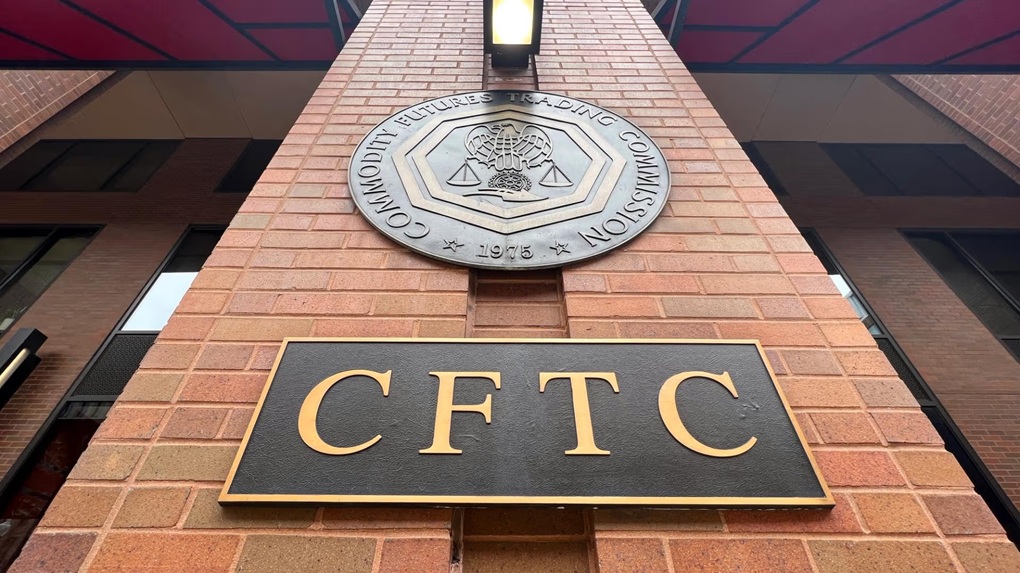
The Commodity Futures Trading Commission has permitted a CFTC-registered exchange to list a true bitcoin perpetual contract, marking a major regulatory step for one of the most active segments of global crypto derivatives trading.
The move creates a pathway for bitcoin perpetual contracts, commonly known as perps, to operate inside the US regulatory framework rather than remaining primarily on offshore platforms.
A perpetual contract is a derivative with no fixed expiration date. Unlike traditional futures contracts, which expire on a set date and require traders to roll exposure into later contracts, perpetuals allow continuous exposure to an underlying asset. Traders periodically exchange funding payments designed to keep the contract price aligned with the spot market.
That structure has made perpetuals one of the most important trading instruments in crypto markets, where assets trade 24 hours a day, 7 days a week. For traders, the product reduces the friction of contract expirations. For exchanges, it offers a high-volume instrument that supports hedging, speculation and price discovery.
The CFTC’s decision brings a product long associated with offshore crypto venues into the US-regulated derivatives market. Until now, the lack of a clear US pathway pushed much of the activity overseas, leaving American firms at a competitive disadvantage and limiting access for US market participants.
The agency framed the decision as part of a broader effort to bring digital asset activity under American oversight. Rather than allowing liquidity to remain fragmented across foreign platforms, the CFTC said a regulated framework can address risks tied to leverage, volatility and market integrity.
The approval also reflects a political shift in Washington’s treatment of crypto markets. The statement connected the move to President Donald Trump’s goal of making the United States the global center for crypto activity, arguing that regulated perpetuals are part of bringing innovation back onshore.
Perpetual contracts are not new. The concept was discussed in a 1992 paper by economist Robert Shiller. In crypto, however, they became especially important because digital assets trade continuously, making fixed-expiration futures less natural for many market participants.
The CFTC argued that America’s derivatives markets have historically adapted to new forms of commerce and risk transfer, from agricultural futures to electronic trading and later bitcoin futures. In that view, crypto perpetuals are another stage in the long development of US commodity markets.
The approval does not mean the CFTC views crypto derivatives as risk-free. Perpetual contracts can involve leverage, fast liquidations and sharp volatility. The agency’s position is that those risks are better handled inside a supervised market than pushed to venues outside US oversight.
The decision may also intensify competition between US-regulated exchanges and offshore crypto derivatives platforms, which have dominated perpetual trading for years. If US platforms can offer comparable products under CFTC oversight, domestic firms may gain a more credible route into a market segment that was previously difficult to access legally.
The broader regulatory fight is not finished. Congress is still expected to play a central role in shaping long-term statutory clarity for crypto markets. The CFTC also signaled that its crypto agenda extends beyond perpetuals, including tokenized collateral, market structure and prediction markets.
Still, the approval of a true bitcoin perpetual contract marks a turning point.
For the first time, one of crypto’s most liquid derivatives products has a route into the US regulated market. The question now is whether liquidity follows.
Bitcoin Perps Coming Onshore Is Bigger Than One Contract
This is not just another crypto product approval.
It is a venue fight.
For years, perpetual contracts were the product US regulators could see but would not properly house. Everyone knew the demand existed. Everyone knew traders used them. Everyone knew the liquidity was massive.
But because the US did not offer a workable path, the market went offshore.
Of course it did.
Liquidity does not wait for a policy memo. It finds the least annoying venue and moves there.
That is why this CFTC decision matters. Not because bitcoin perps are new. They are not. Not because the product is clean and harmless. It is not. It matters because the US is finally admitting that if a market is going to exist anyway, it is better to supervise it than pretend offshore volume does not count.
That is the grown-up answer.
Perpetuals are crypto’s native derivatives product. Spot is simple. Futures are familiar. Options are important. But perps are where the action has lived for years.
No expiry.
Continuous exposure.
Funding rates.
High leverage.
Fast liquidations.
Real-time sentiment.
Messy. Brutal. Useful.
And very crypto.
Traditional futures were built around markets that closed. Perps were built for assets that never sleep. That difference matters. Bitcoin does not stop trading at 4 p.m. It does not care about weekends. It does not pause because legacy market structure was designed around human schedules and clearing windows.
So a derivative with no expiration date makes sense.
The funding-rate mechanism is the key. If the perp trades above spot, longs usually pay shorts. If it trades below spot, shorts usually pay longs. That payment keeps the contract anchored to the underlying asset without needing an expiry date.
Simple idea.
Powerful market structure.
Also dangerous when leverage gets stupid.
And leverage always gets stupid.
That is why the US regulatory angle is important. A regulated bitcoin perp market can limit leverage, impose margin standards, monitor liquidation mechanics, oversee exchange behavior and create a cleaner framework for institutional access.
Will that remove risk?
No.
Anyone saying that is selling comfort.
But it can move the risk from opaque offshore venues into a system where rules, surveillance and accountability actually exist.
That is the real win.
The old US approach had a giant hole in it. Regulators worried about crypto derivatives risk, but the practical outcome was that the riskiest activity migrated elsewhere. US firms lost ground. US traders had fewer compliant options. Offshore platforms became the default liquidity centers.
That was not investor protection. That was risk export.
And exported risk has a funny way of coming back.
The CFTC’s new posture is basically: bring it home, regulate it, compete for the liquidity.
That is the right instinct.
The political language around making America the crypto capital of the world will get attention, obviously. It is loud. It is campaign-friendly. It gives the decision a bigger ideological wrapper.
But strip that away and the market logic still holds.
If the US wants leadership in digital asset markets, it cannot only approve the cleanest, slowest, most institution-friendly wrappers. It has to deal with the products traders actually use.
Perps are one of those products.
This is where the approval becomes strategically important. It gives US-regulated exchanges a chance to fight for volume in a market segment that offshore platforms have dominated for years.
But here is the part I would watch closely: liquidity does not move because a regulator allows a product.
Liquidity moves when traders believe execution is good, fees are competitive, leverage is usable, market makers are active and the product behaves the way they expect.
If a US bitcoin perp launches with weak depth, conservative leverage and clunky onboarding, traders will not care that it is regulated. They will keep going where the action is.
That is the hard truth.
Compliance is not enough.
The product has to be tradable.
And perps are especially unforgiving. Thin books get punished. Bad funding mechanics get gamed. Poor liquidation systems create ugly cascades. If the market maker base is weak, spreads widen and serious traders leave.
So this approval opens the door.
It does not guarantee the room fills up.
Still, I think the direction is correct.
The US has spent too much time treating crypto market structure like something that can be delayed into submission. It cannot. If demand is real, the product appears somewhere. If the US blocks it, another jurisdiction hosts it. If another jurisdiction hosts it, liquidity, talent and infrastructure follow.
That is what happened with perps.
Now the CFTC is trying to claw some of that back.
The historical framing is useful here. American commodity markets have always evolved around new commercial realities. Agricultural futures helped manage crop risk. Electronic trading changed execution. Bitcoin futures brought crypto exposure into regulated derivatives markets.
Bitcoin perpetuals are a continuation of that pattern, not an alien object dropped into the system.
The product looks new because crypto market structure moves faster than traditional finance is comfortable with. But the underlying function is old: transfer risk, express views, hedge exposure, discover price.
Same job.
Different wrapper.
The real question is whether regulated perpetuals can be designed without copying the worst habits of offshore crypto.
Because offshore perps became popular for a reason. They were fast, liquid and accessible. They also normalized insane leverage, liquidation hunting and casino-like behavior.
US-regulated perps cannot simply become offshore perps with a nicer logo.
They need guardrails.
Leverage caps.
Clear margin rules.
Strong surveillance.
Transparent funding methodology.
Reliable liquidation design.
Real market-maker accountability.
No weird hidden conflicts.
That is where the CFTC earns its keep.
I do not buy the idea that bringing perps onshore automatically makes the US the crypto capital of the world. That is too easy. One product does not do that.
But it is a serious building block.
And it sends a message: the US is no longer content to watch core crypto liquidity live elsewhere.
That matters to exchanges, market makers, funds, miners, hedgers and institutional desks that want exposure but need a compliant venue.
It also matters for bitcoin itself.
A US-regulated bitcoin perp can deepen derivatives liquidity, improve hedging options and potentially create a more direct bridge between crypto-native markets and traditional financial institutions.
But it could also import more leverage into the US market.
Both things can be true.
That is the uncomfortable part.
More regulated access does not mean less speculation. Sometimes it means more. Once a product becomes easier to trade, more capital enters. More strategies appear. More leverage builds. More liquidation clusters form.
The market gets deeper.
It also gets sharper teeth.
That is why I would not treat this as a victory lap. It is a pressure test.
Can the US host crypto’s most aggressive derivatives product without letting it become a liquidation casino?
Can exchanges build depth without depending on toxic flow?
Can regulators supervise 24/7 risk without acting like they are still watching a market that closes on Friday?
That last point is huge.
Perps are not just a product challenge. They are an operational challenge. A 24/7 contract needs 24/7 risk monitoring, margin systems, market surveillance and incident response.
Traditional market oversight was not built for that rhythm.
Crypto will force the adaptation.
And that may be the bigger story hidden inside the approval. The CFTC is not only allowing a bitcoin perp. It is accepting that regulated US markets must become more continuous, more automated and more responsive if they want to handle digital assets seriously.
That bleeds into everything else.
Tokenized collateral.
Prediction markets.
Crypto market structure.
Onchain settlement.
Eventually, maybe broader 24/7 financial markets.
Bitcoin perps are the wedge.
I would also expect this decision to pressure Congress. Once regulated products exist, lawmakers cannot keep speaking about crypto like it is some side quest. Market structure clarity becomes harder to postpone when major derivatives products are already moving inside the framework.
That does not mean Congress moves quickly.
It rarely does.
But the market will move anyway.
My read: this is one of the more important US crypto derivatives shifts because it targets a real product with real demand. Not a narrative product. Not a symbolic wrapper. A product traders actually use.
That gives it weight.
The only thing I would not do is confuse onshoring with sanitizing.
Perps are perps.
They will still liquidate overleveraged traders. Funding will still squeeze crowded positioning. Volatility will still punish tourists. And if risk controls are weak, regulated venues can still host ugly market events.
But at least now the US has a path to supervise the action instead of pretending the action is somewhere else.
That is better.
Not perfect.
Better.
The next test is simple: does volume show up?
If traders, market makers and institutions actually use US-regulated bitcoin perps, this becomes a real market structure shift. If liquidity stays offshore, the approval becomes more symbolic than transformative.
I would not bet against some liquidity moving.
Regulatory clarity has value. So does US institutional access. So does the ability to trade a crypto-native product without stepping outside the compliant perimeter.
But the market is ruthless.
It will not reward speeches.
It will reward depth, execution and usable risk.
That is where this decision either becomes historic or just another headline.

Shane Neagle is a financial markets analyst and digital assets journalist specializing in cryptocurrencies, memecoins, prediction markets, and blockchain-based financial systems. His work focuses on market structure, incentive design, liquidity dynamics, and how speculative behavior emerges across decentralized platforms.
He closely covers emerging crypto narratives, including memecoin ecosystems, on-chain activity, and the role of prediction markets in pricing political, economic, and technological outcomes. His analysis examines how capital flows, trader psychology, and platform design interact to create rapid market cycles across Web3 environments.
Alongside digital assets, Shane follows broader fintech and online trading developments, particularly where traditional financial infrastructure intersects with blockchain technology. His research-driven approach emphasizes understanding why markets behave the way they do, rather than short-term price movements, helping readers navigate fast-evolving crypto and speculative markets with clearer context.