
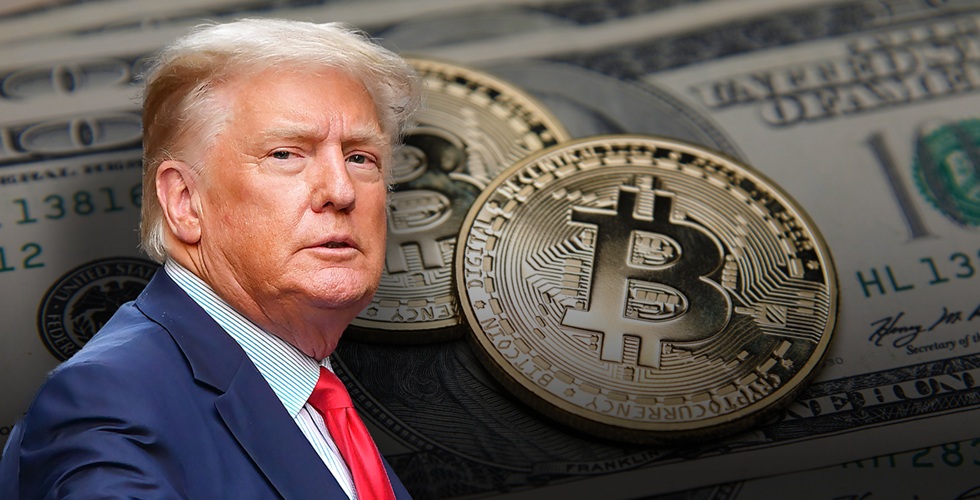
President Donald Trump’s support for cryptocurrency helped push digital assets back into the center of Washington’s policy agenda. Now his family’s growing financial interests in the sector are becoming a problem for the same industry that benefited from his return to power.
The Clarity Act, a major crypto market structure bill, is awaiting further action in the Senate after years of industry lobbying for federal rules. The legislation would create a clearer framework for digital assets, establish disclosure standards and divide oversight between the Commodity Futures Trading Commission and the Securities and Exchange Commission.
The bill has strong support from crypto companies, which see it as a path toward regulatory certainty and broader institutional adoption. But the political environment around the legislation has become more difficult as Democrats push for ethics provisions aimed at limiting how elected officials and their families can profit from digital asset ventures.
The debate has been fueled by Trump’s expanding crypto business interests. Before taking office, Trump launched the TRUMP memecoin, which generated millions of dollars. Trump and his sons have also supported other crypto ventures, including World Liberty Financial. Bloomberg estimated that Trump and his family have made at least $1.4 billion from crypto-related projects since his inauguration.
That has given critics a sharper argument against advancing crypto legislation without conflict-of-interest safeguards.
“They don’t want to bite the hand that feeds them,” Mark Hays, a senior policy analyst at Americans for Financial Reform, said when asked why some lawmakers and industry figures have avoided direct criticism of Trump’s crypto interests.
Hays said he has seen some strong supporters of both Trump and crypto privately acknowledge that the president’s financial involvement in digital assets is “not a good look” while Congress debates the Clarity Act.
The ethics fight has become one of the main obstacles facing the bill in the Senate. Democrats are pushing for language that would restrict the president, vice president, other federal officials and their families from making certain financial transactions involving digital assets.
The Republican-led Senate Banking Committee recently advanced its version of the bill, sending it toward reconciliation with the Senate Agriculture Committee before a potential full Senate vote. The legislation would need 60 votes to pass the Senate, meaning at least some Democratic support is required.
During the Senate Banking Committee vote, Democratic Sens. Angela Alsobrooks and Ruben Gallego supported advancing the bill but tied their backing to the inclusion of ethics language.
Alsobrooks said she is demanding an ethics agreement before supporting a bipartisan floor vote. She said the rules should apply not only to the president and vice president but also to lawmakers themselves.
The House version of the Clarity Act passed with bipartisan support but did not include major ethics restrictions. That difference has become one of the key pressure points between the chambers.
Trump has continued to press Congress to move on digital asset legislation. In a Truth Social post, he called for a “future-proof” digital asset market structure and accused crypto critics of trying to block the industry’s growth.
The White House has pointed to Trump’s support for crypto legislation and executive actions as part of his promise to make the United States the “crypto capital of the world.”
Senate Banking Committee Chairman Tim Scott has also backed the legislation and aligned himself with Trump’s broader crypto agenda. When asked about ethics, Scott said the issue is important but sits outside the Banking Committee’s jurisdiction.
Democrats disagree. Sen. Elizabeth Warren, the top Democrat on the Senate Banking Committee, has argued that Congress should not advance a crypto bill that benefits the president’s private financial interests while millions of Americans struggle with basic costs.
A Senate Democratic spokesperson said any crypto bill without guardrails preventing federal officials from profiting off digital assets would undermine the legitimacy of the industry.
The fight has created a difficult position for crypto companies. Many in the industry want the Clarity Act passed quickly, especially while Republicans control Congress and the White House. But some are reluctant to publicly criticize Trump because his administration has taken a broadly favorable approach to crypto regulation.
That silence is becoming part of the problem.
Some industry figures argue that ethics restrictions do not belong in a market structure bill and that Democrats are using Trump’s crypto ventures as a political weapon. They say the bill should focus on regulatory questions, including decentralized finance, disclosure standards and agency jurisdiction.
Others warn that without an ethics compromise, the legislation may not have enough Democratic support to pass the Senate.
The timing is also sensitive. Federal regulators have already begun shifting toward a more favorable approach to digital assets under Trump, but regulatory actions can be reversed by future administrations. Legislation would be harder to unwind and would give the industry more durable rules.
That is why the Clarity Act matters so much.
It is also why Trump’s crypto activity has become such a serious complication. The industry finally has a pro-crypto president, a Republican-led Congress and years of policy momentum behind it. But the president’s personal financial stake in the sector has given opponents a powerful line of attack.
The bill’s chances now depend less on whether lawmakers support crypto regulation in theory and more on whether Republicans and Democrats can agree on conflict-of-interest rules.
Without that deal, the Clarity Act risks becoming trapped between the industry’s push for clear rules and Washington’s growing discomfort with Trump’s crypto profits.
Trump Gave Crypto Its Best Political Window — Then Became the Problem
This is the part the crypto industry does not want to say out loud.
Trump helped open the door.
Now he is standing in the doorway.
The industry spent years begging Washington for clear rules. After the Biden-era enforcement grind, Trump’s return looked like the cleanest political setup crypto had ever had: friendly White House, Republican-led Congress, regulators suddenly less hostile, and a market structure bill with real momentum.
Dream setup.
Then came the Trump memecoin. World Liberty Financial. Family-linked crypto ventures. Bloomberg’s $1.4 billion estimate. All of it landing while Congress is trying to pass the most important crypto market structure bill in years.
That is not background noise.
That is the problem.
The Clarity Act should have been a fight over jurisdiction, disclosures, DeFi carveouts, stablecoin rewards, custody, market structure and SEC-CFTC boundaries.
Instead, it is now also a fight over whether the president and his family can profit from the same sector his administration is trying to regulate.
That is politically toxic.
And everyone knows it.
The funniest part — not funny, actually — is how quiet some crypto people have become. Usually this industry screams about everything. SEC overreach? Endless threads. Bank lobbying? Instant outrage. Bad rulemaking? Panels, podcasts, op-eds, the whole machine.
But Trump’s crypto profits?
Suddenly everyone discovered nuance.
I get why. Nobody wants to hit the guy who helped flip the regulatory weather. He is useful. His administration is friendly. His allies are pushing the bill. The industry does not want to turn a policy win into a MAGA loyalty test.
But silence has a cost.
And Democrats are exploiting it.
The ethics demand is not some random side quest. It is the political price of getting Democratic votes. The Senate needs 60 votes. Republicans do not get there alone. That means Democrats can ask for concessions, and right now the cleanest concession is ethics language.
Honestly, it is not hard to see why.
Try explaining this bill to a normal voter:
Congress is writing crypto rules.
The president supports the rules.
The president’s family is making serious money from crypto.
The bill does not clearly restrict that.
Good luck.
That sounds bad even if every technical provision in the bill is defensible.
Optics matter. In Washington, sometimes optics are the whole trade.
This is where the industry is misreading the room. Some crypto sources argue that ethics does not belong in a market structure bill. Technically, fine. You can make that argument.
Politically, it is weak.
Because the bill is not moving through a vacuum. It is moving through a Senate where Democrats need cover to vote yes. If they back crypto legislation without ethics language, they hand their own side an attack ad.
“Senator voted to help Trump’s crypto empire.”
That is the line.
Simple. Brutal. Effective.
Doesn’t matter if the bill also helps Coinbase, developers, exchanges, DeFi teams and institutional investors. Politics compresses complexity into a weapon.
And this weapon is obvious.
Ruben Gallego and Angela Alsobrooks advancing the bill with an ethics caveat matters. That is not noise. That is the shape of the deal. They are basically saying: we can get there, but not for free.
The industry should probably take that opening instead of pretending the ethics fight is fake.
Because if this collapses, both sides will blame each other.
Republicans will say Democrats killed crypto clarity for political points.
Democrats will say Republicans protected Trump’s conflicts over the industry’s future.
Crypto lobbyists will blame Senate process.
House people will complain the Senate keeps rewriting their work.
Banking lobbyists will keep fighting stablecoin rewards in the background.
Messy.
Very Washington.
But the center of gravity is still Trump.
He is the industry’s biggest political asset and its cleanest liability at the same time. That is a terrible combo.
I do not think the Clarity Act is dead. Not yet. There is too much pressure behind it, and regulators cannot give the industry permanent certainty through agency action alone. A future administration can reverse guidance. Legislation sticks harder.
That is why crypto wants this now.
But the bill’s odds are clearly worse if ethics language gets treated like an insult rather than a bargaining chip.
The smart move is obvious: accept a credible ethics provision, narrow it carefully, make it apply across federal officials, and move the market structure fight forward.
Take the hit.
Bank the bill.
Because the alternative is dumb.
If crypto loses its best legislative window because nobody wanted to tell Trump’s orbit “you are making this harder,” that would be peak industry self-sabotage.
And yes, Democrats are using the issue politically. Of course they are. That does not mean the issue is fake.
The president having direct family-linked exposure to crypto ventures while Congress writes crypto law is a real conflict problem. At minimum, it is an optics bomb. At worst, it becomes the reason a once-viable bill fails.
The crypto industry loves to talk about incentives.
Here are the incentives.
Democrats need ethics cover.
Republicans need Democratic votes.
The industry needs durable legislation.
Trump wants a political win and a pro-crypto legacy.
Nobody wants to admit the president’s own crypto ventures are poisoning the bill.
That is the trade.
The Clarity Act’s actual policy substance may still be workable. SEC-CFTC division, disclosures, consumer protection, federal market structure, all of that can be negotiated.
But the politics are uglier now.
Midterms are coming. Democrats do not want to look like they enabled Trump’s crypto profits. Republicans do not want to look like they threw Trump under the bus. The industry does not want to anger either side because it needs the bill.
So everyone talks around the obvious.
Trump made crypto powerful in Washington again.
Then he made it harder to vote for crypto.
That is the contradiction sitting inside the Clarity Act.
The only move that makes sense is an ethics compromise. Not because Democrats are saints. Not because Republicans suddenly care about clean government. Because the bill probably needs it to survive.
Without it, crypto may discover that having the most powerful ally in the room is not always enough.
Sometimes he becomes the bag.

Shane Neagle is a financial markets analyst and digital assets journalist specializing in cryptocurrencies, memecoins, prediction markets, and blockchain-based financial systems. His work focuses on market structure, incentive design, liquidity dynamics, and how speculative behavior emerges across decentralized platforms.
He closely covers emerging crypto narratives, including memecoin ecosystems, on-chain activity, and the role of prediction markets in pricing political, economic, and technological outcomes. His analysis examines how capital flows, trader psychology, and platform design interact to create rapid market cycles across Web3 environments.
Alongside digital assets, Shane follows broader fintech and online trading developments, particularly where traditional financial infrastructure intersects with blockchain technology. His research-driven approach emphasizes understanding why markets behave the way they do, rather than short-term price movements, helping readers navigate fast-evolving crypto and speculative markets with clearer context.