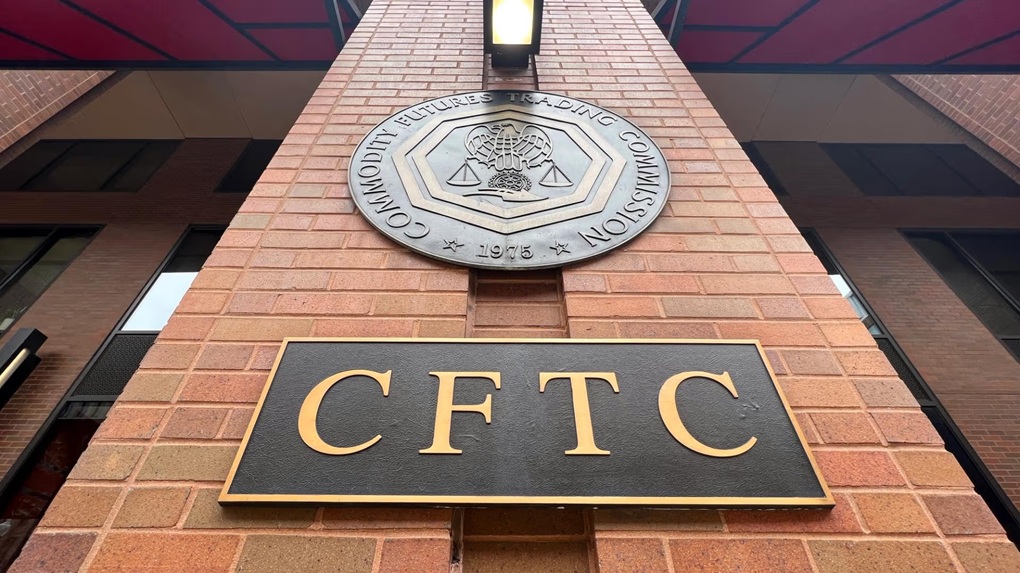
The Commodity Futures Trading Commission is exploring a new federal regulatory category for cryptocurrency exchanges that could turn one of the industry’s most prominent post-FTX transparency practices — proof-of-reserves — into an actual regulatory obligation.
The agency on October 5 published an Advanced Notice of Proposed Rulemaking covering two contemplated frameworks called Regulation Crypto Asset Transactions, or Regulation CTX, and Regulation Crypto Asset Markets, or Regulation CAM.
The initiative would create a purpose-built federal registration route for certain crypto trading venues under the Commodity Exchange Act rather than forcing every crypto exchange into the same regulatory structure.
Crucially, ordinary spot exchanges would not automatically have to become CFTC-registered CAMs. Chairman Michael Selig described the system as a three-rung regulatory ladder that depends largely on what products an exchange offers.
The CFTC Is Proposing a Three-Level Crypto Exchange System
Under Selig’s framework, the first rung consists of ordinary spot cryptocurrency exchanges. These venues would continue to fall under the CFTC’s anti-fraud and anti-manipulation authority but would otherwise remain primarily regulated through state money-transmission and related licensing regimes.
That preserves the type of state-versus-federal regulatory distinction already becoming increasingly important across U.S. digital markets. Dave Finances recently examined a similar jurisdictional fight in the prediction-market industry, where Polymarket is arguing that federal CFTC regulation should override additional state restrictions.
The second rung would cover exchanges offering retail customers cryptocurrency transactions on a margined, leveraged or financed basis. Those platforms would need CFTC registration.
They could register as conventional designated contract markets, or DCMs, or potentially use the newly contemplated Crypto Asset Market category, which would operate as a crypto-specific subcategory of DCM registration.
The third rung would cover exchanges offering perpetual futures and other derivatives. Those venues would remain within the existing DCM framework.
The distinction is commercially important. Regulated U.S. derivatives venues are already moving aggressively toward perpetual products, with platforms including OG.com seeking CFTC approval for new perpetual-futures structures. Regulation CAM would create another route specifically designed for crypto transactions sitting between conventional spot trading and the broader derivatives market.
Proof-of-Reserves Could Become a Regulatory Requirement
The most notable investor-protection provision may be buried deeper in the contemplated CAM framework.
Selig said Regulation CAM could impose a proof-of-reserves obligation on exchanges that maintain customer property in omnibus accounts for customers’ benefit.
That would represent a meaningful shift in how proof-of-reserves functions in the crypto market.
Since FTX collapsed in 2022, major exchanges have increasingly published wallet balances, Merkle-tree attestations and other reserve reports intended to demonstrate that customer assets exist. But these disclosures have generally remained voluntary exercises designed by the exchanges themselves rather than a standardized U.S. federal requirement.
A CFTC rule could potentially move proof-of-reserves from the marketing and reassurance layer into the compliance infrastructure of a federally registered exchange.
The distinction matters because showing crypto assets sitting in wallets does not by itself prove the complete financial health of an exchange. Reserve data has to be considered alongside customer liabilities, custody arrangements, segregation, encumbrances and any claims against those assets.
Retail investors have become increasingly sensitive to that distinction. Recent efforts by cryptocurrency communities to encourage coordinated withdrawals from centralized exchanges have reflected continuing concern over whether exchange balances represent assets that can actually be returned to users on demand.
The CFTC’s contemplated approach would place proof-of-reserves within a larger customer-protection structure rather than treating it as a stand-alone cryptographic snapshot.
Customer Assets Could Also Come Under FCM Segregation Rules
Proof-of-reserves is only one part of the framework.
The CFTC is also considering requiring Crypto Asset Transactions to be intermediated by futures commission merchants, or FCMs.
Under that model, FCMs would manage customer accounts and funds while becoming responsible for existing Commodity Exchange Act protections covering capital, disclosure, recordkeeping and segregation of customer property.
That could materially change the legal architecture behind a crypto trading account.
Today, retail applications increasingly combine assets that look identical on screen while carrying entirely different investor protections underneath. Dave Finances recently examined this issue in Binance’s stock-trading expansion, where custody and customer protections change depending on which product a user actually owns.
The CAM model would attempt to make those responsibilities more explicit for federally regulated crypto markets.
FCM intermediation would also bring customer-facing activity within Bank Secrecy Act requirements, including anti-money-laundering controls, customer identification and suspicious-activity reporting.
The CFTC is seeking feedback on how traditional FCM requirements should be adapted to crypto custody and trading without simply importing rules designed for conventional futures markets unchanged.
Self-Custody Could Also Get a Clearer Regulatory Advantage
The consultation addresses another long-running question: when has a retail customer actually received cryptocurrency?
Section 2(c)(2)(D) of the Commodity Exchange Act contains an exception for certain retail commodity transactions that result in “actual delivery” within 28 days.
The CFTC previously issued digital-asset guidance on the issue in 2020 but withdrew that interpretation in December 2025, saying it needed to reconsider the framework as crypto markets evolved.
The agency is now considering codifying a clearer standard under which sending cryptocurrency to a customer’s external, non-custodial wallet within 28 days would generally satisfy the actual-delivery exception.
That creates an interesting regulatory distinction between assets remaining inside a custodial exchange ledger and assets transferred under the customer’s direct control.
It also reflects the broader shift toward regulated financial structures that can interact directly with self-custody. That same theme has appeared elsewhere in U.S. digital finance, including regulated banking infrastructure connected directly to self-custodial wallets.
Proof-of-Reserves May Finally Be Moving Beyond the FTX Era
The proof-of-reserves provision is the most interesting part of the CFTC consultation because crypto exchanges have spent four years using the concept without settling what it should actually prove.
After FTX, publishing wallet balances became almost obligatory from a reputation standpoint. Exchanges wanted customers to see billions of dollars sitting on-chain and conclude that their deposits were safe.
But reserves are only half of a balance sheet.
An exchange can possess $10 billion of assets and still have a serious problem if it owes customers $12 billion, has pledged some of those reserves elsewhere or has mixed customer property with corporate funds.
A federal proof-of-reserves requirement becomes genuinely useful only if regulators define what sits around the proof: how liabilities are measured, how often balances are reconciled, whether assets are encumbered, who verifies the information and what happens when reserve coverage falls below required levels.
That is where CAM could become much more consequential than another exchange attestation dashboard.
The Bigger Prize for Exchanges Is Federal Leverage
There is also a commercial trade-off buried inside the framework.
An exchange that remains a straightforward spot platform could continue operating principally through state licensing. That avoids the full CAM compliance burden.
But an exchange that wants to offer retail leverage would have a reason to move into the federal system.
That means the CFTC is effectively attaching additional commercial privileges to stronger federal supervision.
The structure resembles dual banking regulation more than a blanket crypto licensing law. Firms could choose the regulatory path that matches the products they want to sell — until leverage or derivatives push them onto a rung where federal registration becomes mandatory.
For large crypto exchanges, that could eventually make CAM registration attractive rather than merely burdensome. A single federal framework could be easier to scale nationally than navigating an expanding patchwork of state requirements, particularly if registration also provides a clear legal path to offering leveraged crypto products to U.S. retail customers.
The Details Will Decide Whether CAM Actually Fixes Anything
None of this is final.
The CFTC has opened an advance rulemaking process and will use public comments to determine whether and how it proceeds with formal regulations. Comments are due within 60 days after the notice is published in the Federal Register.
Exchanges, market makers, custody providers, FCMs and blockchain companies are therefore likely to fight over details ranging from capital requirements to custody architecture and how proof-of-reserves should actually be calculated.
That debate matters because there is a weak version and a strong version of this rule.
The weak version simply forces exchanges to publish another periodic crypto balance report.
The strong version connects independently verifiable reserves to liabilities, customer-property segregation, custody controls and regulatory supervision.
If the CFTC chooses the second path, proof-of-reserves could stop being something exchanges publish voluntarily after a crisis and start becoming part of what legally defines a federally regulated crypto marketplace.
That would be a much bigger change than the phrase “proof-of-reserves” initially suggests.

Johan Shamshad is a financial markets writer at Dave Finances covering cryptocurrencies, trading platforms, brokers, fintech, financial regulation, and developments across global markets. He previously worked at Gulf News, adding newsroom experience to his coverage of fast-moving financial and digital-asset markets.
His work focuses on identifying market-moving events, company developments, regulatory changes, product launches, and shifts in trading and financial infrastructure.
Johan contributes news and analysis designed to help readers understand not only what happened, but why a development matters and how it may affect the wider financial landscape. You can reach out to him via his social media accounts:
Linkedin: https://www.linkedin.com/in/johan-shamshad-742851262/
X: https://x.com/Yasmine_FX
Investing: https://www.investing.com/members/contributors/279781574