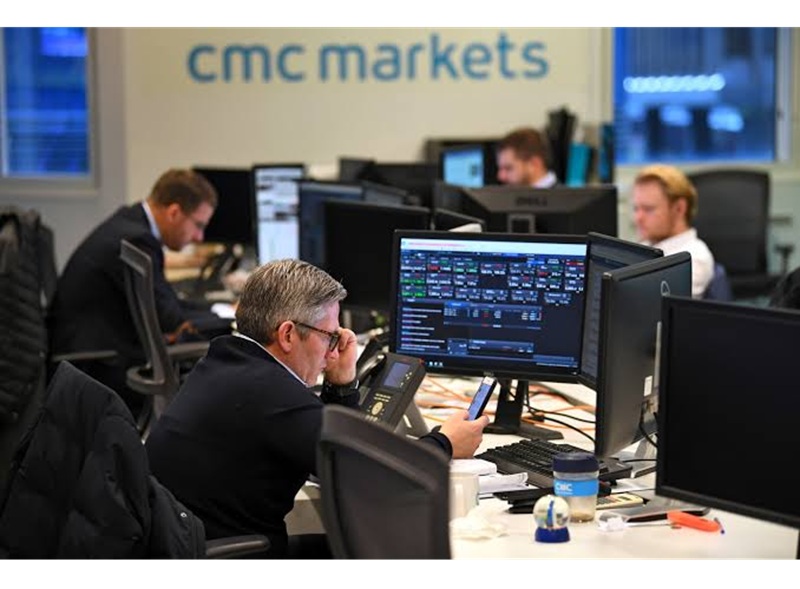
CMC Markets experienced an order-processing incident lasting about 65 minutes on October 1, creating a period in which some traders may have had difficulty getting orders handled normally while markets were live.
The broker said on its official status page that intermittent technical difficulties began at 02:25 UTC and could affect the processing of orders on its trading platform. CMC said it was investigating the problem as a priority and directed customers requiring assistance to live chat.
The company marked the incident resolved at 03:30 UTC, producing an approximately one-hour-and-five-minute disruption window.
CMC’s brief disclosure does not say which instruments, regions, account types or platform versions were affected. More importantly for traders, it does not specify what “order processing” meant in practice.
There is a large difference between an order taking longer to appear in an app and a trader being unable to submit, modify or cancel an order while a leveraged position remains exposed. As of publication, there is not enough verified public evidence to determine where the October 1 incident falls on that spectrum.
CMC Has Not Said Whether Orders Were Rejected or Delayed
The status update confirms that order processing may have been affected, but leaves the execution consequences unclear.
Potential problems could theoretically include delayed submissions, rejected orders, unsuccessful modifications, delayed cancellation requests or slower execution confirmations. None of those specific outcomes has been confirmed by CMC.
That distinction is important because the financial consequence depends heavily on what happened after a trader pressed the buy, sell or close button.
If an instruction reached CMC’s execution infrastructure and was simply displayed late to the customer, the financial effect could be limited. If the order never reached the execution system, was rejected incorrectly or could not be cancelled while prices moved, the situation becomes more consequential.
A recent Revolut CFD trading dispute illustrates why that difference matters. In that case, a customer alleged that a technical problem prevented the closure of a WTI position for roughly 90 minutes, turning what had been a profitable position into an eventual loss of about $5,300. The allegation was not independently verified, but it showed how quickly a platform problem can become a financial dispute when a live leveraged trade is involved.
No comparable, verified loss claim has yet been established in connection with CMC’s October 1 incident.
The Incident Comes After Other September Platform Issues
CMC’s public incident history shows that October 1 was not the only recent period in which the broker reported technical difficulties.
On September 21, CMC reported issues affecting AXJO, SPX and VIX CFD options on its Next Generation platform. That incident remained open from 01:57 UTC until 05:24 UTC.
A separate issue involving the same three options markets was reported the following day, beginning at 01:11 UTC and closing at 06:11 UTC.
CMC’s status history also records an earlier app trading-platform incident beginning September 11, as well as APAC Invest order-processing delays in August. Those entries do not establish that the October 1 problem had the same technical cause, and CMC has not connected the incidents publicly.
Still, repeated platform notices matter more to active traders than isolated website downtime. Dave Finances recently examined trading interruptions reported by Capital.com customers, where the central question was also whether users could continue managing live positions normally when access or platform performance deteriorated.
Order Processing Is Where an Outage Can Become a P&L Event
Not every broker outage has the same financial significance.
A delayed chart, unavailable research page or temporary login inconvenience can frustrate customers without necessarily changing their portfolio. Order-processing failures are different because the broker sits directly between the trader’s intention and the market outcome.
For a long-term investor waiting to purchase an unleveraged stock, a 20-minute delay may have little impact. For a CFD trader holding a leveraged position during a fast market, even a few minutes can matter.
The same issue appears in copy trading, where execution timing between linked accounts can create different results. A recent Tickmill execution-gap complaint centered on an allegation that follower accounts closed at a loss while the corresponding master account produced a profit. Again, the importance was not simply whether software worked perfectly; it was whether execution differences translated into different financial outcomes.
For CMC, the October 1 status message does not yet establish any such outcome. There is no disclosed figure for failed orders, affected accounts or compensation claims.
That means it would be premature to describe the event as an execution failure across CMC Markets. The confirmed fact is narrower: CMC acknowledged intermittent technical difficulties that could affect order processing between 02:25 UTC and 03:30 UTC.
CMC’s Own Uptime Numbers Raise the Investor Relevance
The incident is particularly notable because technology reliability is central to CMC Markets’ investment case.
CMC reported group-wide platform uptime of 99.98% for FY2026, up from 99.93% in FY2025. The company defines that measure around the percentage of trading hours during which customers can trade on its Next Generation and Invest platforms.
That is a very high availability rate, and one 65-minute incident does not invalidate it. The October event also occurred in FY2027, so it should not be retroactively compared with the prior year’s KPI as though the figures cover the same measurement period.
But the strategic importance of uptime is increasing.
CMC generated £392.6 million in net operating income during FY2026, up 15% year over year, while profit before tax increased 20% to £101.3 million. The company has also been positioning its technology as infrastructure for institutional and B2B partners rather than only as a direct retail trading platform.
That expansion includes major Australian and New Zealand partnerships and a broader push into API-driven financial infrastructure. Dave Finances recently examined the company’s growth backdrop while covering CMC Markets’ rapidly expanding ANZ business, including the planned Westpac partnership involving approximately A$39 billion of assets under administration and about 500,000 share-trading accounts.
The larger CMC’s infrastructure footprint becomes, the more operational reliability becomes an investor issue rather than simply a customer-support metric.
Longer Trading Hours Make Reliability Harder, Not Easier
The trading industry is simultaneously moving toward longer market access.
Brokers increasingly offer extended-hours equities, around-the-clock crypto markets and products designed to keep clients trading outside traditional exchange sessions. CMC itself has expanded into 24/5 U.S. share trading and broader multi-asset access.
Competitors are moving in the same direction. Robinhood, for example, is pushing toward 24/7 trading across more products, a shift that creates opportunities for additional volume but also reduces the quiet periods available for maintenance, upgrades and incident recovery.
That trade-off is increasingly important for brokers. More trading hours can generate more engagement and revenue, but customers also begin to expect production systems to be available almost continuously.
A technical problem at 02:30 UTC can no longer automatically be dismissed as occurring outside meaningful trading hours. FX, CFDs, commodities, indices and international markets can still be active, while expanded-hours products increasingly keep additional instruments tradable around the clock.
The Next Useful Evidence Would Come From Order Logs
The October 1 incident becomes materially more important if customers produce evidence that orders were rejected, duplicated, delayed or impossible to close during the 65-minute window.
The most useful evidence would be precise rather than anecdotal: order IDs, server timestamps, screenshots showing error messages, execution confirmations and price data from the moment the instruction was submitted.
If several unrelated traders documented the same failure between 02:25 UTC and 03:30 UTC, that would point toward a common operational problem with measurable customer consequences.
If no such pattern emerges, the incident may ultimately remain a relatively contained period of degraded order-processing performance that CMC identified and resolved within just over an hour.
That is the line investors should watch.
The status page already establishes that something went wrong in a part of the trading workflow where reliability matters. What it does not establish is whether that technical problem changed actual executions, prevented traders from controlling positions or generated losses.
Until CMC provides more detail or customers produce matching order-level evidence, the most defensible conclusion is that the broker experienced a confirmed 65-minute order-processing incident — but the financial consequences, if any, remain unknown.

Johan Shamshad is a financial markets writer at Dave Finances covering cryptocurrencies, trading platforms, brokers, fintech, financial regulation, and developments across global markets. He previously worked at Gulf News, adding newsroom experience to his coverage of fast-moving financial and digital-asset markets.
His work focuses on identifying market-moving events, company developments, regulatory changes, product launches, and shifts in trading and financial infrastructure.
Johan contributes news and analysis designed to help readers understand not only what happened, but why a development matters and how it may affect the wider financial landscape. You can reach out to him via his social media accounts:
Linkedin: https://www.linkedin.com/in/johan-shamshad-742851262/
X: https://x.com/Yasmine_FX
Investing: https://www.investing.com/members/contributors/279781574