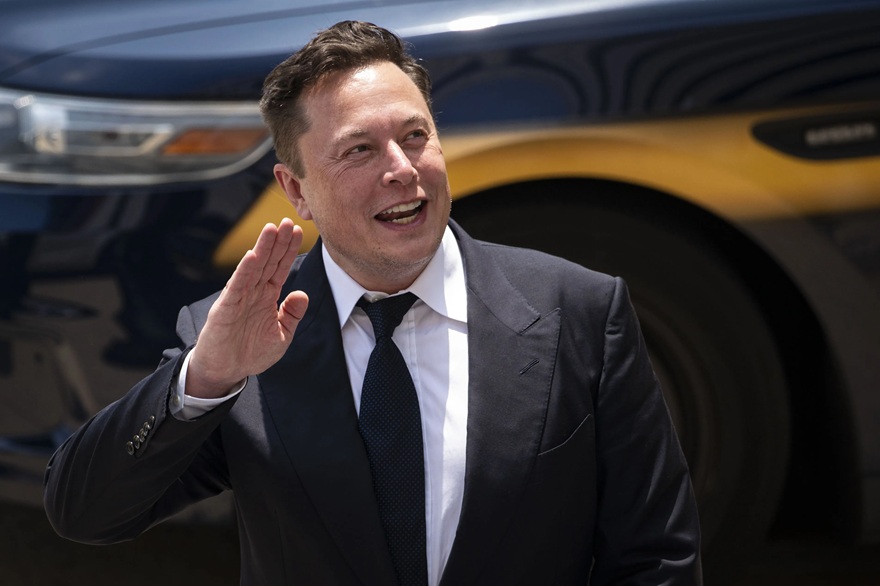
Elon Musk controls nearly half of SpaceX’s outstanding shares and more than 85% of its voting power, giving him extraordinary authority over the newly public company at a time when speculation is building around a possible combination with Tesla.
Recent regulatory filings show Musk beneficially owns about 6.4 billion SpaceX shares, equal to roughly 48.4% of the company.
The ownership figure matters well beyond calculating Musk’s personal fortune.
SpaceX has a dual-class share structure that gives its Class B stock 10 votes per share, compared with one vote for each Class A share. Most of Musk’s holdings carry the stronger voting rights, leaving him with more than 85% of the company’s total voting power.
That means SpaceX may be publicly traded, but control remains firmly in Musk’s hands.
The structure gives him substantial freedom to pursue acquisitions, issue shares and reshape a company that has already expanded far beyond its original rocket-launch business.
It also raises a harder question for public shareholders: what happens when Musk’s interests across SpaceX, Tesla and his other companies overlap?
That issue is becoming increasingly relevant as Musk pushes his businesses deeper into artificial intelligence, robotics, computing and communications — areas where the boundaries between individual companies are becoming less clear.
SpaceX IPO Pushes Musk Into Trillionaire Territory
SpaceX’s public debut transformed Musk’s already enormous fortune.
The company began trading on Nasdaq under the ticker SPCX following one of the largest technology IPOs ever, giving public investors direct exposure to a business that had spent more than two decades operating privately.
Musk’s holdings in SpaceX, combined with his substantial ownership of Tesla, pushed the value of his publicly traded stakes to around $1 trillion as SpaceX shares climbed following the listing.
His actual net worth can move dramatically from day to day because so much of his wealth is tied to publicly traded stock.
That volatility cuts both ways.
A strong session for SpaceX and Tesla can add tens of billions of dollars to Musk’s paper fortune. Sharp declines can remove the same amount just as quickly.
The more important issue for investors is that Musk now controls two enormous publicly traded companies that increasingly operate in overlapping technological territory.
Tesla is moving deeper into artificial intelligence, autonomous vehicles and humanoid robots.
SpaceX now stretches across rockets, Starlink satellite communications, artificial intelligence and large-scale computing infrastructure.
That overlap creates opportunities.
It also creates conflicts.
Musk Holds 6.4 Billion SpaceX Shares
The newly disclosed ownership numbers show just how concentrated SpaceX remains despite its IPO.
Musk effectively controls approximately 6.4 billion shares, or 48.4% of the company.
Only around 849 million of those holdings are Class A shares. Much of the remainder consists of Class B shares and equity linked to restricted stock units or options.
The distinction is critical.
Class B shares carry 10 votes for every one vote attached to a Class A share.
That leaves Musk with voting control far greater than his economic ownership.
In practice, outside shareholders can own a large portion of SpaceX financially while having little ability to challenge Musk on major corporate decisions.
Dual-class structures are common among founder-led technology companies. They are designed to protect founders from pressure to sacrifice long-term shareholder demands.
SpaceX may represent one of the more extreme versions.
Musk does not merely retain influence.
He retains effective control.
The Cursor Deal Shows How Powerful That Structure Can Be
SpaceX’s acquisition strategy offers an early example of what that control can mean.
The company recently completed its roughly $60 billion acquisition of Cursor, the AI coding platform developed by Anysphere.
The transaction was paid largely with SpaceX equity, allowing the company to make a major acquisition without giving up anything close to Musk’s controlling position.
Even after accounting for shares connected to the Cursor transaction, the dilution to Musk’s voting power is relatively small.
That matters because $60 billion is hardly a minor purchase.
If SpaceX can absorb an acquisition of that size while barely denting Musk’s control, then substantially larger transactions remain structurally possible.
Tesla is the obvious company investors are watching.
A combination would be on an entirely different scale, but the mechanics are no longer impossible to imagine.
Tesla Creates a Different Control Problem
Musk has repeatedly said he wants greater voting control at Tesla, particularly as the company moves deeper into artificial intelligence and robotics.
He has argued that developing powerful technologies without enough voting influence would leave him uncomfortable.
His economic ownership of Tesla, however, remains well below the level of control he enjoys at SpaceX.
That creates an obvious asymmetry.
At SpaceX, Musk can effectively dictate the outcome of shareholder votes.
At Tesla, outside shareholders matter much more.
Tesla has responded in part through a massive incentive package designed to award Musk additional equity if the company reaches ambitious valuation and operating milestones.
Some provisions could become important in an acquisition scenario, potentially affecting how much Tesla equity Musk ultimately receives if control of the company changes.
The arrangement adds another layer to speculation about whether SpaceX could eventually make an offer for Tesla.
A SpaceX-Tesla Deal Would Be Unlike a Normal Acquisition
Most acquisitions involve a buyer trying to convince another company’s board and shareholders that the proposed price makes economic sense.
A SpaceX-Tesla transaction would be stranger.
Musk sits at the center of both sides.
He leads SpaceX.
He leads Tesla.
He owns major stakes in both.
And he has dramatically more voting control over SpaceX than Tesla.
That creates a potential governance problem.
A premium large enough could make a SpaceX offer attractive to Tesla investors, particularly if they receive shares in a combined company.
But what is good for Tesla shareholders would not automatically be good for SpaceX shareholders.
The bigger the premium SpaceX pays, the better the deal becomes for Tesla investors.
The same premium could represent value transferred away from existing SpaceX investors.
That tension would sit at the heart of any transaction.
Why Musk Might Want the Companies Together
There is a strategic case for combining them.
Tesla is no longer simply an electric-car manufacturer. Musk increasingly describes its future around autonomous driving, robotics, AI and physical-world intelligence.
SpaceX has also moved far beyond rockets.
Its businesses now touch communications, satellite infrastructure, AI computing and other technologies that require massive amounts of capital, energy and computing power.
A combined company could potentially share AI models, computing infrastructure, engineering talent and capital more freely.
Tesla’s energy-storage technology could complement SpaceX infrastructure.
Starlink connectivity could support Tesla products.
AI systems developed across Musk-controlled companies could operate within one corporate structure rather than through related-party agreements.
The argument would be easy to sell.
The valuation would be much harder.
SpaceX Investors Face a Founder-Control Discount
For SpaceX shareholders, Musk’s voting position is both part of the attraction and part of the risk.
Investors buying SPCX are effectively buying into Musk’s decision-making ability.
That has worked extraordinarily well in some cases.
SpaceX turned reusable rockets from a mocked idea into the core of its launch strategy. Starlink became one of the world’s largest satellite communications networks. The company has repeatedly taken technical and financial risks that more conventional management teams may never have attempted.
Founder control helped make that possible.
But the same governance structure that lets Musk ignore short-term pressure also lets him pursue transactions ordinary shareholders might reject.
That is the trade.
SpaceX shareholders did not buy democracy.
They bought Musk.
The xAI Precedent Still Matters
The concern is not theoretical.
SpaceX has already absorbed businesses connected to Musk’s wider technology empire.
Those transactions may create strategic benefits, particularly as AI becomes more central to SpaceX’s ambitions.
But they also establish a precedent.
If Musk believes another company fits his long-term vision, concentrated voting power makes it difficult for ordinary investors to stop the transaction.
Cursor reinforced that point.
Tesla would push it to another level entirely.
A merger would create one of the largest corporate combinations ever attempted and would bind Musk’s aerospace, communications, AI, automotive, energy and robotics ambitions together.
For investors, the question would not simply be whether those businesses fit.
It would be what price SpaceX pays to make them fit.
Musk’s SpaceX Control Makes Tesla the Ultimate Related-Party Trade
Forget the trillionaire headline for a second.
That number is fun. It gets clicks. Musk owns enough SpaceX and Tesla stock that his paper wealth can wander above or below $1 trillion depending on what two tickers do on a random Tuesday.
Fine.
The much more interesting number is 85%.
That is roughly the level of voting control Musk has at SpaceX.
And that changes the entire investment case.
SpaceX is public now, but this is not a conventional public company where shareholders collectively keep management on a leash.
Musk has the leash.
Everybody else owns pieces of the dog.
48% Ownership Is Already Huge. The Votes Are the Real Weapon
Musk controls about 48.4% of SpaceX economically.
That alone is insane for a company of this size.
Then you get to the Class B shares.
Ten votes each.
Suddenly his economic stake and his actual power become completely different things.
He does not need 51% of the stock because he already controls more than enough votes to dominate the company.
That means an activist cannot really pressure him.
A coalition of institutional investors cannot easily outvote him.
A bad quarter does not threaten his job.
And if he wants to make a huge strategic bet?
Good luck stopping it.
For investors who believe Musk is the reason SpaceX exists in its current form, that is the feature.
For everyone else, it is the bug.
Cursor Was the Test Run
The $60 billion Cursor acquisition is where this gets interesting.
Sixty billion dollars used to be an enormous technology deal.
Now SpaceX can swallow one and Musk barely notices the dilution to his voting control.
That tells you something.
SpaceX stock has become currency.
Very expensive currency.
And when your stock trades at a monster valuation, using shares to buy companies becomes tempting because you are effectively paying with something the market values extremely highly.
If Musk believes SpaceX shares are richer currency than the target’s equity, he has every incentive to use them.
Cursor was big.
Tesla would be nuclear.
The Tesla Merger Logic Is Not Crazy Anymore
A few years ago, SpaceX buying Tesla would have sounded like Musk-fan fiction.
Now?
I would not dismiss it.
Tesla wants to be an AI and robotics company.
SpaceX increasingly looks like a rocket, satellite, communications, compute and AI conglomerate.
Musk sits on both sides.
The businesses already share his attention, philosophy and long-term technological bets.
The strategic PowerPoint basically writes itself.
Combine compute.
Combine AI.
Combine engineering.
Connect Starlink with Tesla products.
Use Tesla energy systems around SpaceX infrastructure.
Give Optimus access to another giant operating environment.
Stop moving resources between separate Musk companies through awkward agreements.
There are legitimate synergies.
But that’s not the dangerous part.
The dangerous part is price.
Musk Has Different Incentives on Each Side
This is where I would get uncomfortable as a SpaceX shareholder.
Musk wants more control of Tesla.
He has said it.
SpaceX already gives him enormous control.
So imagine SpaceX offers Tesla shareholders a fat premium in an all-stock transaction.
Tesla investors cheer.
They get paid above market.
Musk potentially gets a larger economic relationship with Tesla inside a company he already controls.
And SpaceX shareholders?
They write the cheque.
Not literally.
Through dilution.
That’s the conflict.
If Musk were only SpaceX CEO, he’d theoretically want to buy Tesla as cheaply as possible.
If he were only Tesla CEO, he’d want Tesla shareholders to get the biggest premium imaginable.
He’s both.
So whose side is he negotiating for?
That’s not a cute governance question. It is the whole deal.
A Huge Premium Could Still Leave Musk in Charge
Normally, issuing mountains of stock to acquire another trillion-dollar company creates a control problem for the buyer.
Issue enough shares and your existing shareholders get diluted.
Founder loses power.
Board changes.
New voting blocs appear.
Except Musk starts with such an absurd voting advantage at SpaceX that he has room.
Lots of it.
The Cursor deal showed how little a major stock acquisition moves the needle.
Tesla would obviously be dramatically larger. But the underlying point survives: Musk can tolerate dilution that would cost almost any other founder control.
That’s financial firepower most CEOs can only dream about.
Or shareholders can have nightmares about.
Depends which side you’re on.
Tesla Shareholders Have a Different Calculation
Tesla investors would probably care about one thing first.
What is the exchange ratio?
Offer them enough SpaceX stock and the philosophical debate gets short very quickly.
If Tesla trades at $X and SpaceX offers the equivalent of $1.3X, people listen.
Thirty percent premium?
Now boards listen.
Forty percent?
Votes start getting interesting.
Make it rich enough and shareholders may not care whether the combined structure gives Musk almost untouchable control.
They are getting paid.
But here’s the catch.
SpaceX stock itself is volatile and highly valued.
If Tesla shareholders receive SPCX rather than cash, they are not really exiting.
They are swapping one Musk bet for a much bigger Musk bet.
SpaceX’s Valuation Makes Bad Deals Easier to Hide
This is something investors consistently underestimate.
When a stock trades at a massive valuation, dilution feels cheap.
Issue $50 billion in shares.
Market barely blinks.
Issue another $60 billion.
Still fine.
You can buy real companies using paper the market is pricing aggressively.
Brilliant while the valuation holds.
Awful if it doesn’t.
Because eventually investors ask whether the acquired earnings, technology or growth justified all those new shares.
That’s when yesterday’s “strategic combination” becomes tomorrow’s goodwill problem.
I would watch this closely with SpaceX.
The company has gone from rockets into satellites, AI, compute and software at speed.
That’s either the creation of the next great technology conglomerate…
or mission creep with a $2 trillion valuation attached.
Could be both for a while.
The xAI Deal Already Gave Investors the Warning
Musk combining his own companies is not hypothetical behavior.
He has done it.
That matters.
When the same person controls multiple entities, traditional corporate boundaries become soft.
One company has capital.
Another has technology.
Another has distribution.
Another has data.
Musk can see them as pieces of one mission even when shareholders bought them as separate investments.
That worldview makes sense from his chair.
It may not make sense from yours.
If I own SpaceX stock, I care about return on SpaceX capital.
I don’t automatically care that rescuing or acquiring another Musk company helps the broader Musk universe.
Those are not the same objective.
This Is the Price of Buying Musk
SpaceX investors knew what they were buying.
Nobody can pretend otherwise.
This is not Coca-Cola.
You are not buying a mature corporation where the CEO can be swapped out and the machine keeps humming.
The Musk premium is embedded everywhere.
The rockets.
Starlink.
Mars.
AI.
The valuation.
The volatility.
The governance.
All of it.
People pay insane multiples because they believe Musk can build things other management teams would never even attempt.
You don’t get that upside and then suddenly demand committee-driven management when he does something weird.
That’s the bargain.
Still, a bargain can become expensive.
The Trillionaire Number Is Almost a Distraction
Musk becoming a trillionaire sounds historically important.
It is historically interesting.
But for shareholders, his wealth itself barely matters.
What matters is how much of that wealth sits in voting stock and what those votes let him do.
That’s the distinction.
A founder worth $1 trillion with 5% voting power is rich.
A founder worth $1 trillion with 85% voting power is a governing structure.
Musk is the second one at SpaceX.
His wealth gives him incentives.
His votes give those incentives teeth.
I Would Not Buy SpaceX Without Pricing This In
This is where I’d draw the line.
If you’re buying SPCX because you think rockets, Starlink, AI and orbital infrastructure can justify today’s valuation, fair.
Make the bull case.
But don’t run a discounted cash flow as though this is a normal company and stick a neat little governance discount at the bottom.
Musk control is not a footnote.
It’s part of the asset.
He may make acquisitions you hate.
He may combine businesses you wanted kept separate.
He may sacrifice near-term earnings for projects that take a decade.
He may be spectacularly right.
He may torch billions.
And your vote probably won’t stop him.
That’s what 85%-plus voting control means.
Tesla Is the Deal I’d Watch
Cursor is done.
The next transaction matters more.
I wouldn’t assume a Tesla-SpaceX merger happens just because the mechanics make it possible. Tesla shareholders still matter. Boards matter. Valuation matters. Legal scrutiny would be ugly. Conflicts would be everywhere.
But the idea no longer belongs in the crazy folder.
Musk has the motive.
SpaceX has the equity currency.
He has overwhelming voting control on one side.
He wants greater control on the other.
And his companies are drifting closer together technologically.
That’s enough for me to watch it.
Closely.
Because if Musk ever decides the cleanest way to solve his Tesla voting-power problem is to put Tesla inside the company he already dominates, SpaceX shareholders may discover what founder control really costs.
The question won’t be whether Musk can pull it off.
The question will be whether he pays a price that makes sense for everyone who doesn’t have his last name.

Shane Neagle is a financial markets analyst and digital assets journalist specializing in cryptocurrencies, memecoins, prediction markets, and blockchain-based financial systems. His work focuses on market structure, incentive design, liquidity dynamics, and how speculative behavior emerges across decentralized platforms.
He closely covers emerging crypto narratives, including memecoin ecosystems, on-chain activity, and the role of prediction markets in pricing political, economic, and technological outcomes. His analysis examines how capital flows, trader psychology, and platform design interact to create rapid market cycles across Web3 environments.
Alongside digital assets, Shane follows broader fintech and online trading developments, particularly where traditional financial infrastructure intersects with blockchain technology. His research-driven approach emphasizes understanding why markets behave the way they do, rather than short-term price movements, helping readers navigate fast-evolving crypto and speculative markets with clearer context.