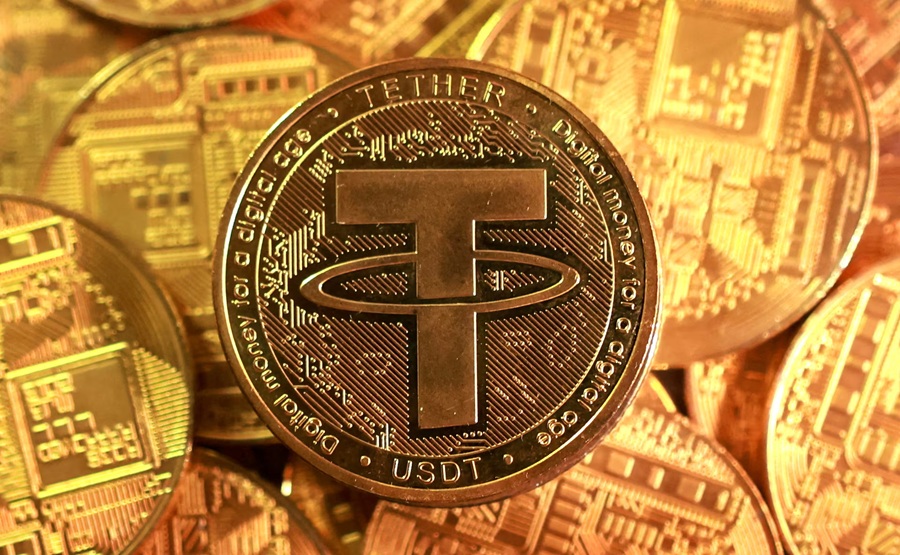
Tether says its financial exposure to a bank connected to a U.S. civil forfeiture case is limited, after federal prosecutors seized approximately $84.2 million in cash and cryptocurrency from accounts and wallets linked to payments company Capstone Limited.
The stablecoin issuer confirmed that it is a customer of EQIBank, a Dominica-licensed bank that prosecutors allege used Capstone to move money through the U.S. banking system. Tether said assets it holds at EQIBank represent less than 0.034% of its total group assets and that it had “no knowledge” of the conduct alleged against Capstone.
The case does not accuse Tether or sister company Bitfinex of wrongdoing. The Justice Department’s civil forfeiture complaint refers instead to an unnamed cryptocurrency company, an affiliated exchange and a bank in Dominica. Tether and Bitfinex were subsequently identified in media reports as the crypto businesses involved in the payment activity described in the case.
For investors, the distinction is important. U.S. authorities are seeking forfeiture of property held in Capstone’s name, while Tether’s connection comes through its banking relationship with EQIBank and the payment infrastructure the bank allegedly used.
Federal Case Targets More Than $83 Million in Cash and 1.18 Million USDT
The civil forfeiture complaint was filed on July 15 in the U.S. District Court for the Eastern District of California.
A federal court order issued on September 14 lists $79.11 million seized from a Wells Fargo Securities account held in Capstone’s name, another $1.86 million from a Wells Fargo Bank account and roughly $2.06 million from JPMorgan Chase.
The case also covers approximately 1.12 million USDT from one cryptocurrency address and another 54,578 USDT from a second address. Together, the cash and stablecoins amount to roughly $84.2 million at USDT’s dollar peg.
Federal prosecutors allege that Capstone operated as an unlicensed money transmitter and misrepresented the nature of its business when opening U.S. bank accounts. According to the complaint, Capstone presented itself as an information technology business while using accounts to receive and distribute funds for third parties.
Prosecutors said one Wells Fargo business account disbursed about $337 million between March and December 2025, excluding Treasury purchases. Hundreds of individuals and entities allegedly received payments through the arrangement, including recipients outside the United States.
EQIBank has separately argued that the seized assets belong to the bank and has said roughly $89 million, representing about 80% of its monetary holdings, was affected. The bank has warned that losing access to the funds could threaten its continued operations.
The forfeiture proceeding remains unresolved. Capstone has denied wrongdoing, while the court has not made a final determination that the seized assets are subject to permanent forfeiture.
Tether Says Its Direct Financial Exposure Is Small
Tether has not disclosed the exact amount of money it holds through EQIBank. However, its statement that the exposure represents less than 0.034% of group assets provides an upper boundary.
Tether reported total assets of $187.75 billion as of June 30, meaning 0.034% would equal roughly $63.8 million. Its actual exposure, based on the company’s wording, would therefore be below that amount.
The issuer also reported liabilities of $183.64 billion at the end of June, leaving approximately $4.11 billion in excess reserves. On those figures alone, even an exposure near the theoretical $63.8 million ceiling would represent a relatively small portion of Tether’s reported capital buffer.
There has also been little evidence so far that the case has created immediate stress around USDT. The stablecoin’s market capitalization was approximately $183.7 billion on September 25, while its price continued trading close to its $1 target.
That makes the immediate balance-sheet issue different from a traditional reserve crisis. The more important question is how the case affects Tether’s banking relationships and operational infrastructure over time.
The Case Highlights a Risk Stablecoin Investors Rarely See
Stablecoin analysis normally focuses on reserves: Are enough Treasury bills, cash and other liquid assets available to honor redemptions?
This case highlights another layer of risk.
A company can have ample reserves on paper and still depend on banks, payment processors and other intermediaries to move fiat currency between customers and those reserves. Each additional intermediary becomes another potential point of regulatory, legal or operational disruption.
That infrastructure question is becoming more important as stablecoin issuers and crypto firms move closer to the traditional banking system. The attraction of stablecoins is 24/7 blockchain settlement, but issuance and redemption still frequently depend on ordinary bank accounts and payment rails operating behind the scenes.
Tether’s scale makes the issue particularly relevant. USDT is one of the largest financial assets in crypto and processes enormous volumes across exchanges, payment businesses, trading firms and emerging markets. A problem involving one small banking counterparty may be financially immaterial to Tether, but it demonstrates how complicated the infrastructure behind a global stablecoin has become.
The industry is already investing heavily in alternatives. Companies are building stablecoin payments and clearing infrastructure designed to reduce settlement friction, while regulated institutions are experimenting with structures that connect tokenized money more directly to banking systems.
The Bigger Issue Is Counterparty Visibility, Not the $84 Million Headline
The headline number looks dramatic, but investors should separate three different risks.
First is Tether’s direct financial exposure. Based on the company’s own figures, that appears small relative to its balance sheet.
Second is EQIBank’s position. The seizure appears far more material to the bank, which says a substantial majority of its monetary assets have been affected. If EQIBank ultimately cannot recover those assets, its financial condition could become the more immediate problem.
Third is the broader counterparty issue for Tether. Investors now have another example of how the stablecoin business depends on relationships that exist outside the blockchain itself. Those relationships can involve banks, custodians, payment companies and correspondent accounts spread across multiple jurisdictions.
There is also an interesting contrast in Tether’s relationship with law enforcement. The company has increasingly promoted its compliance efforts, including the more than $450 million in illicit digital assets frozen through the T3 Financial Crime Unit formed with TRON and TRM Labs. Nothing in the Capstone complaint suggests Tether knew about the alleged conduct now under investigation.
Still, the case shows that issuer-level compliance is only one part of the system. Stablecoin companies also need visibility into the intermediaries their banks use to move customer money.
That issue will become harder to ignore as stablecoins move deeper into mainstream finance. Recent launches such as Revolut’s EURR stablecoin rollout show that tokenized money is increasingly converging with regulated banking and payments rather than remaining confined to crypto exchanges.
For Tether, the immediate numbers suggest the EQIBank exposure is manageable. The longer-term question is less about whether $84 million threatens USDT’s reserves and more about whether stablecoin issuers can build banking networks transparent and resilient enough to support assets approaching the scale of major financial institutions.

Johan Shamshad is a financial markets writer at Dave Finances covering cryptocurrencies, trading platforms, brokers, fintech, financial regulation, and developments across global markets. He previously worked at Gulf News, adding newsroom experience to his coverage of fast-moving financial and digital-asset markets.
His work focuses on identifying market-moving events, company developments, regulatory changes, product launches, and shifts in trading and financial infrastructure.
Johan contributes news and analysis designed to help readers understand not only what happened, but why a development matters and how it may affect the wider financial landscape. You can reach out to him via his social media accounts:
Linkedin: https://www.linkedin.com/in/johan-shamshad-742851262/
X: https://x.com/Yasmine_FX
Investing: https://www.investing.com/members/contributors/279781574