
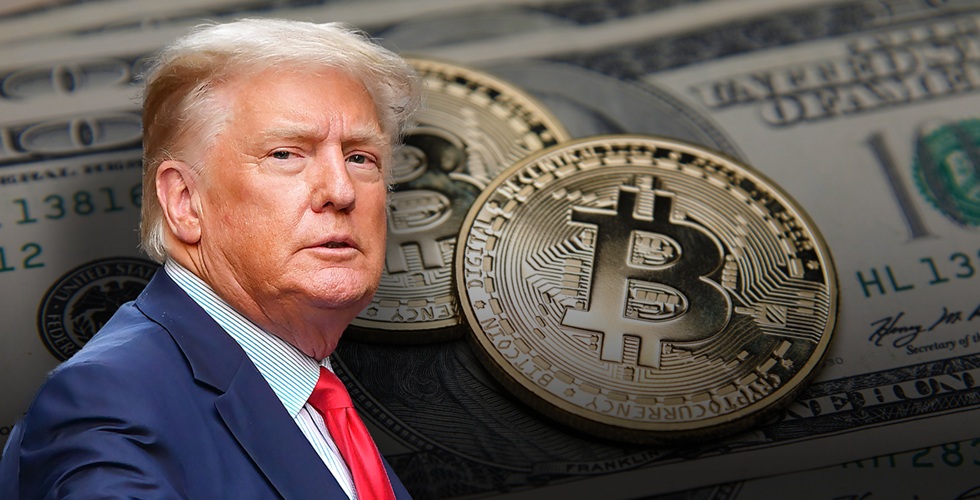
A Solana token promoted through a Donald Trump-licensed collectibles brand collapsed by roughly 99% within hours on Saturday, after wallets linked by blockchain analysts to the token’s operators accumulated more than 82% of its supply and then unloaded their holdings.
The episode began on Aug. 29 when the X account for Real Trump Coins promoted a new Solana token called Trump Digital Gold, or GOLD, and directed users to RealTrumpCoins.com. President Donald Trump had previously promoted that website in September 2024 as the exclusive seller of his officially licensed silver medallions.
What initially appeared to be another Trump-branded crypto launch quickly unraveled.
Blockchain analytics platform Lookonchain flagged the token’s unusually concentrated ownership shortly after trading began. The developer controlled 600 million GOLD, while 15 newly created wallets spent only $18,657 to acquire another 224.5 million tokens. Together, those positions represented about 82.45% of the one-billion-token supply.
Lookonchain initially reported that the 15 wallets sold their 224.5 million tokens for 3,178 SOL, worth roughly $330,000, producing an estimated $312,000 profit from their $18,657 investment.
A later on-chain update showed that the selling went considerably further. Addresses identified as belonging to the operators ultimately disposed of about 824.54 million GOLD, or 82.454% of the entire supply, for approximately 9,784.6 SOL. Lookonchain estimated cumulative proceeds of around $1.01 million.
The token’s market capitalization briefly reached about $66 million before collapsing. Lookonchain said it fell from roughly $55 million to $1 million in around 30 seconds during the main selloff and subsequently dropped toward $700,000.
By the time of writing, DEX Screener showed GOLD at about $0.000417 with a market capitalization of approximately $416,000 and around $89,000 of liquidity. The pair had already generated roughly $22.8 million of trading volume from more than 119,000 transactions since being created earlier Saturday.
Real Trump Coins Website Still Promotes GOLD
The biggest unanswered question is whether the people normally controlling the Real Trump Coins brand actually launched the token.
Posts promoting GOLD were removed from the brand’s X account, prompting widespread claims that the account had been compromised. Some online users attributed the incident to Iranian hackers, but no credible public evidence has established who controlled the accounts at the time, and those claims remain unverified.
The website creates further confusion.
As of Saturday afternoon, RealTrumpCoins.com was still actively promoting Trump Digital Gold. The page identifies the Solana contract, advertises a 4% trading fee and says 99% of those fees will be used to buy back GOLD. It states that the project aims to make GOLD a top-10 cryptocurrency by market capitalization.
The page also describes GOLD as the “Trump Foundation’s most ambitious crypto project to date.” That language is notable because the Donald J. Trump Foundation agreed to dissolve under judicial supervision in December 2018 and terminate its corporate existence. A New York court subsequently approved the distribution of its remaining assets.
That discrepancy does not establish who altered or controls the website, but it raises another red flag around the authenticity of the GOLD promotion.
The website’s own footer also makes clear that its physical Trump coins are not manufactured, distributed or sold by the Trump Organization. It says JBCZ Group LLC uses the Trump name, trademarks and Donald Trump’s likeness under a licensing agreement.
Trump nevertheless gave the collectibles business considerable credibility himself. On Sept. 21, 2024, he told followers that RealTrumpCoins.com was the exclusive website for the official silver medallion he designed. Days later, he reposted another Real Trump Coins promotion.
There was no comparable announcement from Trump announcing GOLD.
The incident is also awkwardly timed. Just one week before the GOLD launch, Eric Trump rejected online claims that another Trump coin was being prepared, writing on Aug. 22 that nobody was launching a new coin and describing claims otherwise as fraudulent.
Analysis: GOLD Exposes the Weak Point in Political Meme Coins
The most important feature of the GOLD collapse is not whether the final operator profit was $312,000, $1 million or the unverified $8.2 million later claimed online.
It is how little authentication was required to generate tens of millions of dollars in perceived value.
A recognizable X account, a familiar Trump-branded domain and an official licensing relationship around physical merchandise were enough to create the appearance of legitimacy. Once those signals lined up, traders rushed into a token whose supply structure was extraordinarily concentrated from the beginning.
The blockchain was actually giving buyers the opposite message.
More than 82% of the supply was controlled by the developer and a small cluster of newly created wallets. That should have mattered more than a social-media endorsement. Instead, the brand apparently mattered more than the distribution.
That is the structural weakness of political meme coins. Their value is usually tied less to cash flows, technology or even a coherent project than to perceived proximity to a public figure. Whoever can convincingly manufacture that proximity can create a market almost instantly.
The Real Trump Coins situation made that problem unusually acute because the underlying brand was not invented from scratch. Trump genuinely promoted it in 2024. The products are genuinely licensed to use his name and likeness. That historical legitimacy could then be transferred, at least temporarily, to something completely different: a Solana token.
The continuing website promotion makes the situation even more complicated. If only the X account was compromised, the presence of GOLD on the website requires another explanation. If both were compromised, the attackers gained access to a much more convincing distribution channel. If the token was deliberately launched by someone associated with the licensed merchandise operation, the question becomes who authorized it and why the supply was structured and sold in the way visible on-chain.
None of those possibilities has yet been established.
The episode therefore deserves more caution than simply labeling GOLD an official Trump token or, at the other extreme, assuming every aspect was unquestionably the work of hackers.
The on-chain part is clearer: a small group controlled the overwhelming majority of supply, those holdings were aggressively sold, and the token lost almost all of its market value.
There is a political backdrop as well. Trump has made crypto policy a major part of his administration and on Aug. 19 urged Congress to pass what he called a “fair version” of the CLARITY Act, which would establish a broader federal market structure for digital assets. The legislation remains a major point of debate in Washington.
Trump and his family also have genuine financial ties to crypto through ventures including World Liberty Financial. Its own disclosures state that a Trump-affiliated entity owns approximately 38% of WLF Holdco and that Trump-affiliated entities and family members hold 22.5 billion WLFI tokens.
That makes authentication even more important. Investors already know that Trump-branded crypto products can be real.
GOLD demonstrates the dangerous consequence: when a genuine political brand, licensed merchandise and crypto ventures already coexist, a fraudulent or unauthorized token does not need to invent credibility from nothing. It only needs to borrow it for long enough to attract liquidity.

Shane Neagle is a financial markets analyst and digital assets journalist specializing in cryptocurrencies, memecoins, prediction markets, and blockchain-based financial systems. His work focuses on market structure, incentive design, liquidity dynamics, and how speculative behavior emerges across decentralized platforms.
He closely covers emerging crypto narratives, including memecoin ecosystems, on-chain activity, and the role of prediction markets in pricing political, economic, and technological outcomes. His analysis examines how capital flows, trader psychology, and platform design interact to create rapid market cycles across Web3 environments.
Alongside digital assets, Shane follows broader fintech and online trading developments, particularly where traditional financial infrastructure intersects with blockchain technology. His research-driven approach emphasizes understanding why markets behave the way they do, rather than short-term price movements, helping readers navigate fast-evolving crypto and speculative markets with clearer context.