EU Watchdog Flags Insider Trading, Wash Trading and Manipulation Risks
Europe’s top securities regulator has escalated its warnings over prediction markets, saying insider trading and market manipulation risks are reaching new levels as crypto-based platforms attract traders and established financial companies increasingly enter the sector.
The European Securities and Markets Authority said prediction markets present unusually difficult surveillance problems because traders can take positions on real-world events including elections, wars and sports while using cryptocurrency infrastructure that can make identifying coordinated activity harder.
“Market manipulation and insider trading risks reach new levels in the context of prediction markets,” ESMA said in its latest Trends, Risks and Vulnerabilities report, published Sept. 10.
The regulator said the use of crypto can hinder the detection and prevention of insider trading, wash trading and coordinated market manipulation, adding that a growing number of incidents shows prediction markets are “rife with insider trading.”
The warning comes as the prediction-market industry is rapidly moving closer to mainstream financial infrastructure.
ESMA specifically highlighted growing institutional interest, noting that exchanges, investment funds and other market-infrastructure providers are seeking partnerships with prediction-market businesses. That creates a different regulatory problem from when event betting was primarily associated with standalone crypto platforms.
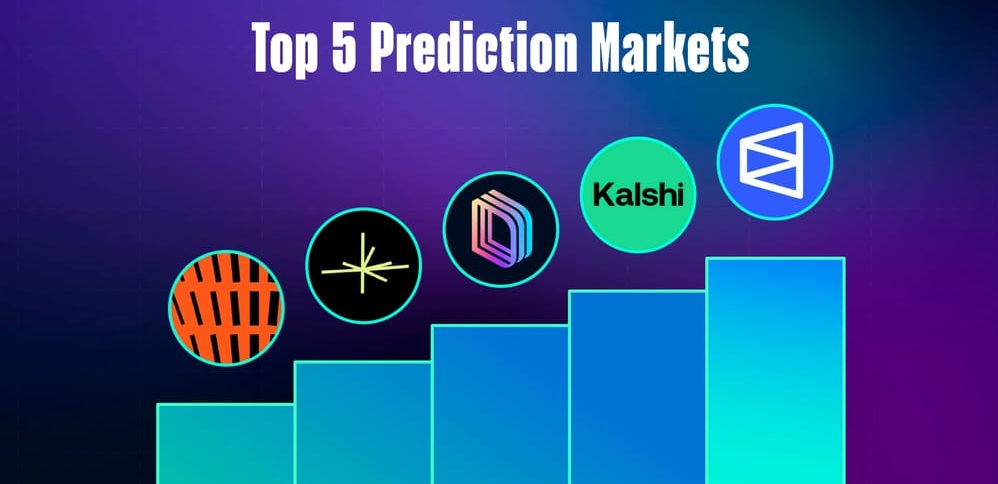
Polymarket and Kalshi have become the industry’s two most prominent platforms, while crypto companies, brokerages and traditional financial firms have increasingly begun incorporating event contracts into existing customer products.
Polymarket‘s architecture illustrates the crypto element that concerns ESMA. The platform operates on Polygon and denominates trading in the USDC stablecoin, with blockchain transactions used to facilitate its prediction markets.
The company is simultaneously seeking a larger European presence. On Sept. 9, one day before ESMA published its latest warning, Polymarket announced that it had joined Brussels-based industry group Blockchain for Europe as part of an effort to expand its engagement with European policymakers and regulators. The company said it wants a more consistent European regulatory framework for prediction markets.
Kalshi, meanwhile, operates as a regulated derivatives exchange in the United States and has also expanded internationally. Congressional scrutiny in the U.S. has already focused on whether its international expansion provides adequate identity verification and controls against trading based on confidential information. A House Oversight Committee letter in May noted that Kalshi had expanded to more than 140 countries and questioned whether internationally placed contracts were subject to equivalent controls.
Concerns about manipulation are no longer theoretical.
A study published this week by the Anti-Corruption Data Collective examined more than 11,000 U.S. congressional prediction markets on Kalshi, Polymarket and Polymarket’s U.S. platform. It found that 94% could experience a price movement equivalent to 10 percentage points following a single wager of less than $1,000. Kalshi and Polymarket disputed the implications of the study, arguing that distorted prices create incentives for other traders to correct them.
There have also been enforcement cases involving traders with privileged information. Kalshi recently permanently banned former U.S. congressman George Santos after regulators accused him of manipulating a market concerning whether he would attend the State of the Union. He made nearly $18,000 from the trades, while Kalshi imposed a fine of more than $71,000 and reported the matter to the Commodity Futures Trading Commission.
The CFTC has separately pursued cases involving individuals accused of trading on confidential information, including a U.S. soldier who allegedly made more than $400,000 using classified information.
Europe is taking a considerably more restrictive approach.
In July, ESMA explicitly reminded financial firms that event contracts can fall under existing European restrictions on binary options. If an event contract qualifies as a financial instrument, ESMA said, its binary payout structure means it is covered by national product-intervention measures prohibiting the marketing, distribution or sale of binary options to retail clients.
Even distribution to non-retail clients requires the provider to hold the relevant investment-firm authorisation. ESMA also noted that some event contracts may separately qualify as gambling under national laws.
The latest market-integrity warning therefore adds another layer to the regulatory problem. European authorities are no longer questioning only whether prediction markets should be classified as derivatives, binary options or gambling products. They are increasingly focusing on whether their underlying market structure can adequately prevent abuse.
That issue also reaches crypto exchanges moving into event-based trading.
Crypto.com’s Prediction Trading product, for example, offers yes-or-no event contracts inside its app through Crypto.com Derivatives North America. The company says the product is regulated by the CFTC and currently available only in the United States. Customers can also convert supported crypto assets into dollars to fund prediction trades.
Its U.S.-only status means ESMA’s warning does not amount to an enforcement action against Crypto.com. But the product demonstrates why the boundaries between crypto exchanges, derivatives venues and prediction markets are becoming increasingly difficult to separate.
Crypto Makes Prediction-Market Surveillance Much Harder
The core regulatory problem with prediction markets is not simply that insiders can trade.
Insider trading exists in traditional securities markets as well. The difference is that listed companies have established disclosure obligations, brokers know their customers, exchanges operate surveillance systems and regulators have decades of legal precedent defining what counts as material non-public information.
Prediction markets break several of those assumptions.
What exactly counts as inside information in a contract asking whether a president will say a particular phrase, whether a military operation will occur, whether a celebrity will attend an event or whether a government will take a particular policy action?
Potential insiders could include government employees, soldiers, political advisers, journalists, production staff, sports personnel, contractors or simply someone standing in the right room at the right time.
That universe is vastly larger and less clearly defined than the executives, advisers and major shareholders typically watched around a listed company’s earnings announcement.
Crypto adds another complication.
Blockchain transactions are publicly visible, which can make suspicious wallet activity easier for researchers to spot after the event. But a wallet address does not inherently identify the person controlling it. Funds can move between wallets, decentralized protocols and centralized exchanges, creating an attribution problem that conventional regulated brokerage accounts are designed to reduce.
That helps explain why ESMA specifically linked crypto access with difficulties detecting not only insider trading but also wash trading and coordinated manipulation.
The timing matters because prediction markets are becoming infrastructure rather than a niche crypto product.
Polymarket and Kalshi reportedly generated a combined $48.4 billion in trading volume in August, according to figures cited by Reuters, while major financial and crypto companies are pursuing partnerships and distribution agreements around event contracts.
Once an event contract sits inside the same application where a customer already trades stocks, crypto or derivatives, the friction preventing participation falls dramatically.
For exchanges, that is commercially attractive. For regulators, it means prediction-market risks can spread to a much larger retail audience.
It also creates a compliance challenge for crypto companies considering similar products. Being able to list an event contract technically is not the same as being able to monitor who possesses privileged information about the underlying event, identify coordinated accounts and determine when profitable trading reflects superior forecasting rather than prohibited access.
Europe’s position currently makes that expansion especially difficult. ESMA has already said many binary event contracts cannot be sold to EU retail investors when they qualify as financial instruments. Now it is adding market integrity to the list of concerns.
That does not mean Polymarket, Kalshi or crypto exchanges will abandon Europe.
Polymarket’s decision to increase its Brussels engagement suggests the opposite.
But companies seeking European prediction-market businesses increasingly need to answer two questions rather than one: what regulatory category does the product fall into, and can the operator demonstrate surveillance strong enough for a market in which the most profitable information may belong to someone who knows the outcome before everyone else?

Shane Neagle is a financial markets analyst and digital assets journalist specializing in cryptocurrencies, memecoins, prediction markets, and blockchain-based financial systems. His work focuses on market structure, incentive design, liquidity dynamics, and how speculative behavior emerges across decentralized platforms.
He closely covers emerging crypto narratives, including memecoin ecosystems, on-chain activity, and the role of prediction markets in pricing political, economic, and technological outcomes. His analysis examines how capital flows, trader psychology, and platform design interact to create rapid market cycles across Web3 environments.
Alongside digital assets, Shane follows broader fintech and online trading developments, particularly where traditional financial infrastructure intersects with blockchain technology. His research-driven approach emphasizes understanding why markets behave the way they do, rather than short-term price movements, helping readers navigate fast-evolving crypto and speculative markets with clearer context.