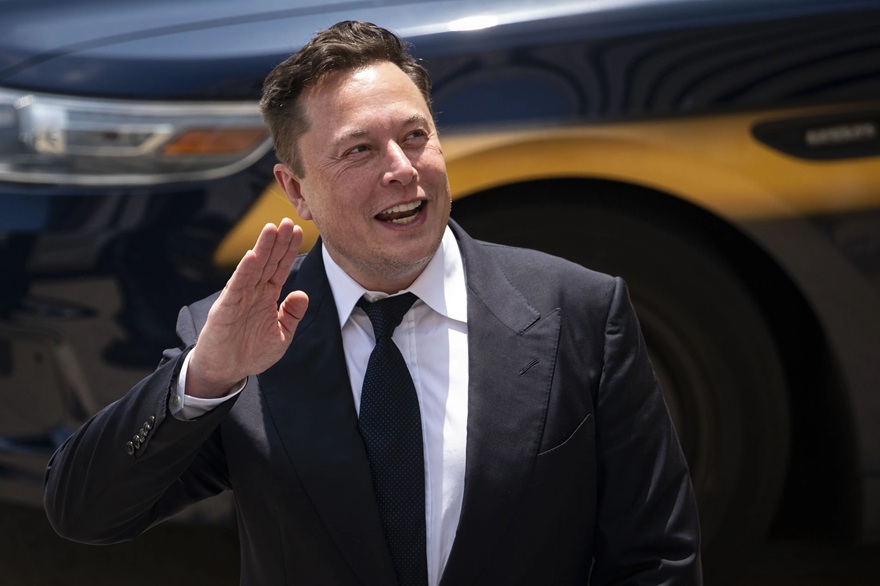
SpaceX and Tesla are exploring a possible merger that could place more than 30,000 bitcoin on one corporate balance sheet, but the much larger question for shareholders is how two publicly traded companies controlled or led by Elon Musk could combine without transferring value unfairly between their investors.
Musk said during SpaceX’s October 20 third-quarter earnings call that both businesses had formed special committees of independent directors to evaluate a transaction. He said a combination could make strategic sense, while emphasizing that the committees had not agreed on terms and that his overlapping interests prevented him from participating in their discussions.
The companies’ last separately confirmed bitcoin counts in June regulatory filings were 18,712 BTC at SpaceX and 11,509 BTC at Tesla, a combined 30,221 BTC. Using a reference price of $83,375.84, the holdings would be worth approximately $2.52 billion. That sum would be notable for a corporate cryptocurrency treasury, but represents less than one-tenth of one percent of a potential combined equity valuation around $3.5 trillion. A merger itself would not create new bitcoin demand: it would bring existing holdings under a new ownership structure.
What Has Musk Actually Said About a SpaceX-Tesla Merger?
Musk confirmed that the two companies have established independent board committees to review whether a combination is worthwhile. As reported by Reuters following the earnings call, he viewed the idea favorably but warned investors not to treat a merger as certain.
The special committees have not announced an agreed valuation, exchange ratio, acquisition structure, financing plan or timetable. There is no signed transaction described in the public account, and neither company’s shareholders have approved a deal. The distinction between evaluating a strategic option and executing a merger is critical when shares are moving on expectations of what a future agreement might contain.
Because Musk has substantial ownership interests in both companies and serves as their chief executive, he faces an unusually direct conflict: a higher acquisition price could benefit the shareholders of one business while diluting or disadvantaging shareholders of the other. Independent committees are intended to evaluate those competing interests separately, although their existence alone cannot establish that any eventual terms will be fair.
SpaceX is now publicly traded under Nasdaq ticker SPCX after its June 2026 IPO. It is not simply a privately held satellite or rocket venture being absorbed into a listed car manufacturer. Both public shareholder bases would have economic claims to consider.
As DaveFinances previously examined in its analysis of Musk’s SpaceX voting control, his beneficial stake of roughly 48.4% has historically translated into much greater voting power through the company’s dual-class share structure. Tesla’s ownership and voting dynamics are materially different.
How Many Bitcoin Would the Combined Company Hold?
SpaceX reported in its quarterly SEC filing for June 30 that it held 18,712 BTC. The company disclosed an acquisition cost of $661 million and a fair value of about $1.10 billion at that reporting date.
Tesla’s second-quarter SEC filing separately stated that the majority of its digital assets consisted of 11,509 BTC, with an original acquisition cost of $386 million. Adding those reported coin quantities produces a combined figure of 30,221 BTC.
| Company | BTC reported at June 30 | Illustrative value at $83,375.84/BTC |
|---|---|---|
| SpaceX | 18,712 | About $1.56 billion |
| Tesla | 11,509 | About $960 million |
| Combined | 30,221 | About $2.52 billion |
The table combines historical coin counts with a reference bitcoin price from October 21. It is not a new consolidated balance sheet, an assertion that both treasuries remain unchanged today or a forecast of their value when any merger might close. Tesla’s third-quarter results are due after the U.S. market close on October 21, when updated disclosures could change the picture.
If the same number of coins were held after a hypothetical merger, a $10,000 move in bitcoin’s price would change their combined market value by about $302 million. That exposure is tangible but relatively small against the size of the proposed corporate combination and SpaceX’s multibillion-dollar quarterly capital investment program.
Why Could AI Spending Matter More Than the Bitcoin Treasury?
SpaceX’s third-quarter earnings release filed with the SEC reported revenue of approximately $14.58 billion, up 161% from the year-earlier period, net income of $4.4 billion and diluted earnings of 35 cents per share.
The standout growth came from SpaceX’s Super Intelligence operation, which expanded through computing infrastructure and AI services, alongside its existing Starlink connectivity business. Quarterly capital expenditures reached about $19.59 billion, with approximately $16.44 billion attributed to AI-related investment. Those spending commitments dwarf the companies’ illustrative combined bitcoin balance.
This is the strategic rationale behind the merger discussion. Tesla is investing in autonomous driving, robotaxis, humanoid robotics, energy storage and semiconductor capacity. SpaceX has moved beyond launch services into communications, data-center infrastructure, AI models and related technology. Combining the companies could allow shared resources, fewer related-party transactions and more integrated capital planning.
But none of those synergies has yet been priced in a binding transaction, and integration itself carries costs. The capital intensity of AI infrastructure creates financing requirements, while Tesla’s automotive and energy-storage operations have different margins, cash-flow patterns and market exposures from SpaceX’s satellite, aerospace and AI businesses.
Buying shares on the assumption that a merger unlocks those synergies would require an assessment of the eventual ownership split, not merely the existence of common projects. Musk’s businesses already cooperate on technology, including the Terafab chip initiative, without being the same legal company.
Would a Merger Change Bitcoin Demand or Treasury Risk?
Combining two companies that already hold BTC is fundamentally different from a new issuer announcing a plan to purchase 30,221 coins in the open market. Unless the companies separately decide to buy or sell, a transaction changes which shareholders indirectly own the assets, not how many bitcoin exist or how much fresh capital enters the market.
That also distinguishes the possible merger from a company whose investment strategy explicitly seeks to accumulate bitcoin through stock sales, debt or preferred securities. In DaveFinances’ examination of Strategy’s bitcoin financing structure, the central question was how a large cryptocurrency treasury interacts with the liabilities raised to fund it. For Tesla and SpaceX, bitcoin is a secondary financial asset within far larger operating businesses.
A post-merger board could choose to retain the holdings, consolidate custody, rebalance risk or sell assets for liquidity. None of these actions has been announced. There is also no disclosed proposal to distribute BTC to shareholders, create a separate bitcoin vehicle or use the coins to finance a takeover.
Even the potential accounting result would depend on how the combination is structured. A stock-for-stock exchange, acquisition involving cash or more complicated holding-company reorganization would affect shareholders differently. Treasury assets would need to be considered alongside liabilities, existing investments and any intercompany stakes rather than simply added to the deal’s headline valuation.
Investors should also distinguish the firms’ own bitcoin from cryptocurrency-linked stock derivatives. As previous DaveFinances reporting on stock-linked crypto products illustrates, indirect price exposure does not confer an ownership interest in the underlying corporate assets.
What Are the Shareholder and Regulatory Obstacles?
The most immediate obstacle is governance. Musk’s voting power makes approvals at SpaceX different from those at Tesla, where a merger would need substantial support from shareholders whose economic interests may not align with his preferred corporate structure.
Any proposal would have to establish the relative valuations of both companies, whether one is acquiring the other, what consideration investors receive and how potential dilution is handled. A share exchange can look attractive to one side and unfavorable to the other depending on the agreed premium.
There could also be competition, national-security and international regulatory questions. SpaceX has extensive U.S. government and defense-related relationships, while Tesla operates automotive production and sales globally, including in China. That combination creates scrutiny beyond an ordinary technology-company acquisition, although no regulator has publicly approved or blocked a specific deal that has not yet been proposed.
Finally, Tesla’s scheduled October 21 earnings report may draw attention to its vehicle margins, energy-storage growth, capital spending and financial position. Tesla has published a company-compiled analyst consensus of approximately $28.34 billion in revenue for the third quarter; that is an estimate, not the company’s actual reported result.
Until committees release agreed terms, investors have no reliable basis to calculate a definitive exchange ratio, merger premium or future ownership percentage. A combination could be strategically appealing while still proving financially unattractive to one set of shareholders.
For now, the confirmed news is the formation of independent committees and Musk’s favorable but qualified remarks. The 30,221 BTC figure provides a striking way to illustrate the corporate assets at stake, yet the major decisions remain the price of combining two very different businesses, the control investors would surrender or receive, and whether AI-driven synergies can justify the transaction.

Johan Shamshad is a financial markets writer at Dave Finances covering cryptocurrencies, trading platforms, brokers, fintech, financial regulation, and developments across global markets. He previously worked at Gulf News, adding newsroom experience to his coverage of fast-moving financial and digital-asset markets.
His work focuses on identifying market-moving events, company developments, regulatory changes, product launches, and shifts in trading and financial infrastructure.
Johan contributes news and analysis designed to help readers understand not only what happened, but why a development matters and how it may affect the wider financial landscape. You can reach out to him via his social media accounts:
Linkedin: https://www.linkedin.com/in/johan-shamshad-742851262/
X: https://x.com/Yasmine_FX
Investing: https://www.investing.com/members/contributors/279781574