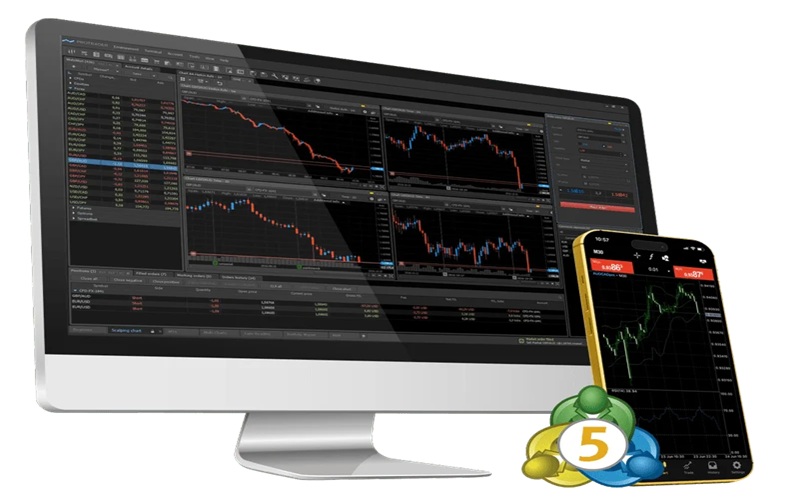
MetaQuotes has rolled out MetaTrader 4 Build 1490, introducing changes to how Stop Loss and Take Profit levels are handled across multiple positions on the same instrument when an account operates under first-in, first-out, or FIFO, rules.
The October 2 update was announced by MetaQuotes on September 30 and is being distributed through MT4’s Live Update system. Alongside the trading-behavior changes, MetaQuotes said the build contains security enhancements, bug fixes and stability improvements, although it did not disclose specific vulnerabilities or CVE identifiers.
The most important change is not a new indicator or interface feature. Build 1490 alters how risk-management levels can propagate between positions on FIFO-configured accounts, meaning traders may see Stop Loss and Take Profit settings automatically carried into new trades or applied across multiple existing positions.
That makes the release more operationally important than a routine MT4 maintenance update, particularly for brokers serving clients under FIFO trading rules and for traders running multiple positions in the same currency pair or CFD.
MT4 Build 1490 Synchronizes Stops Across FIFO Positions
According to MetaQuotes’ official Build 1490 release notice, four specific changes have been introduced.
First, if a trader already has a position open in an instrument with predefined Stop Loss or Take Profit levels, opening the New Order window for the same instrument will automatically populate those existing SL/TP values into the new order fields.
Second, if the trader changes those levels in the New Order window, the revised values will apply not only to the newly opened position but also to the existing position.
Third, if several positions are open in the same instrument without SL/TP levels and the trader subsequently adds stops to one position, MetaTrader will apply the same levels across all positions in that instrument.
Finally, a new position opened through One Click Trading will automatically inherit existing Stop Loss and Take Profit levels already defined for that instrument.
Consider a trader holding one EUR/USD position with a Stop Loss at 1.1500. Under Build 1490 on a FIFO account, opening another EUR/USD order will bring that same stop into the order window automatically. If the trader changes the stop to 1.1520 before opening the second position, the change can also update the first position.
Why FIFO Requires Different Stop-Loss Logic
The behavior is designed around the fundamental constraint of FIFO trading: positions in the same instrument must be closed in the sequence in which they were opened.
In the U.S. retail forex market, NFA Compliance Rule 2-43(b) requires Forex Dealer Members to offset customer positions on a first-in, first-out basis rather than allowing newer positions to be closed ahead of older ones in the same currency pair.
That can create a conflict with position-specific stop orders.
If a trader holds several EUR/USD positions and a Stop Loss attached to the newest trade triggers before the oldest trade is closed, the platform cannot simply close that newer position without potentially violating FIFO requirements.
MetaQuotes has previously described similar logic in MetaTrader 5. On FIFO-configured accounts, applying stop levels across positions in the same instrument ensures that when the level is reached, positions can be closed sequentially in compliant order.
Build 1490 effectively brings more explicit synchronization into the MT4 trading workflow.
The Change Can Affect Manual Traders and Automated Strategies
The most obvious impact is on manual traders who pyramid into the same instrument or operate several separate entries around one market view.
A trader accustomed to treating each ticket as an independently managed position may now encounter behavior that feels different on a FIFO-enabled account. Altering an SL or TP while preparing another order can change protection levels attached to an existing trade.
One Click Trading is particularly important because the new order can inherit previously defined stops without the trader manually re-entering them.
The change may also deserve attention from traders using Expert Advisors or other automated systems.
MT4 remains heavily associated with algorithmic retail forex strategies, and many EAs manage trades using individual ticket numbers, separate entry prices and position-specific stop logic. Developers whose software assumes that each open position can maintain completely independent SL/TP values may need to test behavior carefully on FIFO accounts after Build 1490.
The release comes only days after MetaQuotes pushed a much broader update to its newer platform. Dave Finances recently examined how MetaTrader 5 Build 6230 expanded AI from analysis into platform control, allowing the built-in assistant to interact more deeply with Expert Advisors, indicators, testing tools and economic-calendar data.
By comparison, MT4 Build 1490 is modest. But the change sits much closer to live order management, where small differences in platform behavior can directly affect risk.
Brokers Need to Pay Attention to Configuration and Client Communication
FIFO is not relevant to every MT4 account.
Whether the logic applies depends on the account and broker configuration. Traders using ordinary hedging environments outside FIFO regimes may therefore see no meaningful change in day-to-day position management.
For brokers that do use FIFO configurations, however, Build 1490 raises practical questions around testing, support documentation and client expectations.
A broker should know how the updated terminal interacts with its own server-side setup before customers discover the behavior during live trading. Support teams may also need to explain why changing a stop on what appears to be one trade can modify several positions in the same instrument.
That operational layer matters because retail trading platforms are not merely charting interfaces. They are the point where a broker’s execution rules, risk configuration and customer instructions meet.
Recent order-processing problems at CMC Markets illustrated why apparently narrow platform behavior can become financially important when it interferes with a trader’s ability to place or manage orders during live markets.
Build 1490 is not an outage and there is no indication of a malfunction. But it reinforces the same principle: changes to order-management infrastructure deserve more attention than ordinary cosmetic software updates.
The Security Improvements Remain Largely Undisclosed
MetaQuotes also said Build 1490 contains several important security enhancements, fixes and stability improvements.
No technical breakdown accompanied that statement.
The company did not identify a specific exploit, publicly disclosed vulnerability or active security incident affecting MT4. Traders should therefore avoid interpreting the update as evidence that the platform had suffered a known compromise.
Still, brokers have an incentive to ensure terminals remain current. Trading infrastructure is an attractive target because authentication, account access and order submission all pass through the software ecosystem.
MetaQuotes’ previous major MT4 update this year, Build 1470, was released in March and primarily focused on interface translations, bug fixes and stability. Build 1490 therefore stands out by adding an explicit change to trading behavior rather than limiting the release to maintenance work.
An Old Platform Can Still Produce New Trading Risks
The bigger story is that MetaTrader 4 may be a legacy platform, but it is not operationally irrelevant.
MetaQuotes has spent years directing development attention toward MetaTrader 5, which offers a broader multi-asset architecture and receives substantially more frequent feature releases. Yet MT4 remains embedded across a large portion of retail forex and CFD infrastructure.
That installed base means seemingly small MT4 changes can still reach brokers, automated strategies and traders who have built workflows around behavior that has remained familiar for years.
This is especially important for users who think of Stop Loss and Take Profit levels as belonging exclusively to individual trades.
Under FIFO, that mental model does not always work. The platform has to reconcile a trader’s preferred exit level with a rule that says the oldest position should close first.
Build 1490 makes that interaction more visible.
The Main Risk Is Not the Update — It Is Traders Missing What Changed
There is nothing inherently negative about synchronizing stops across FIFO positions. In fact, it can reduce the chance of creating exit instructions that the trading system cannot execute in the intended sequence.
The risk comes from expectation.
A trader might open several positions because they represent separate strategies. One entry could be a longer-term position, another a short-term trade and a third part of an intraday system. Even though all three concern the same instrument, the trader may mentally treat them as separate exposures.
FIFO rules make that separation harder.
If changing the stop while opening the third position also modifies the stop protecting the first, the trader needs to understand that before clicking Buy or Sell—not after the market reaches the new level.
The same issue applies to automated trading. An EA designed under assumptions about independent ticket-level protection needs to be tested against the broker’s actual FIFO configuration rather than assuming older MT4 behavior will remain unchanged.
This is one reason broker transparency remains important across the CFD sector. The FCA’s recent crackdown on CFD firms over the misuse of UK authorisation focused on a different regulatory problem, but the underlying lesson is similar: retail traders need to know which rules and protections actually apply to the account they are using.
Build 1490 Is Small, but the Behavioral Change Is Real
MetaTrader 4 Build 1490 is unlikely to transform the retail trading industry.
It does, however, change something more consequential than a refreshed interface or another translation update.
On FIFO-enabled accounts, Stop Loss and Take Profit values are becoming more explicitly linked across positions in the same instrument. Existing levels can flow into new orders, newly edited stops can update older positions, and One Click Trading can inherit protection already attached to the instrument.
For brokers, that means testing the new terminal against their account configurations and making sure support teams understand the behavior.
For traders, particularly those holding multiple entries in the same pair, the practical takeaway is simpler: after Build 1490, changing the stop on the trade you are about to open may also change the risk on a trade you already have.
That is a small software update with a potentially meaningful difference at the exact moment traders manage losses and profits.

Johan Shamshad is a financial markets writer at Dave Finances covering cryptocurrencies, trading platforms, brokers, fintech, financial regulation, and developments across global markets. He previously worked at Gulf News, adding newsroom experience to his coverage of fast-moving financial and digital-asset markets.
His work focuses on identifying market-moving events, company developments, regulatory changes, product launches, and shifts in trading and financial infrastructure.
Johan contributes news and analysis designed to help readers understand not only what happened, but why a development matters and how it may affect the wider financial landscape. You can reach out to him via his social media accounts:
Linkedin: https://www.linkedin.com/in/johan-shamshad-742851262/
X: https://x.com/Yasmine_FX
Investing: https://www.investing.com/members/contributors/279781574