
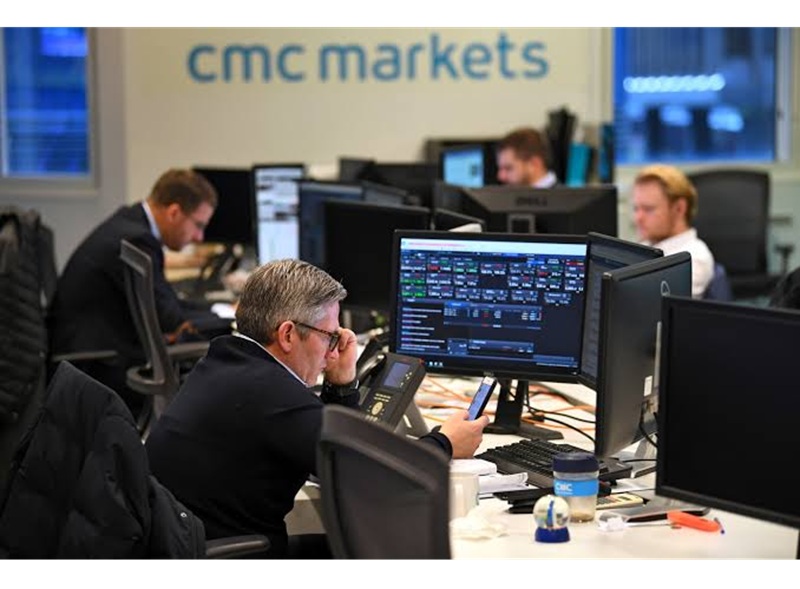
CMC Markets founder and CEO Lord Peter Cruddas has started buying shares in the London-listed trading group and intends to make further purchases worth up to £5 million in total, while another senior executive bought roughly £139,000 of stock on the same day.
CMC disclosed on October 2 that Cruddas acquired 23,011 ordinary shares on the London Stock Exchange in two transactions. He bought 6,456 shares at 604.07 pence and another 16,555 at 604.03 pence, putting the value of the initial purchase at approximately £139,000.
CMC said Cruddas intends to make further purchases taking the total value to as much as £5 million, including the shares bought on Friday.
The transactions were confirmed in a regulatory filing published on October 2.
A separate RNS showed that David Fineberg, CMC Markets’ Head of Global Strategic Partnerships, bought 23,300 shares at 597.96 pence each. That transaction was worth approximately £139,325.
Together, the two executives disclosed around £278,000 of purchases on Friday, before taking into account any additional buying Cruddas makes under his stated £5 million commitment.
The Purchases Came During a Sharp Broker-Sector Selloff
The timing makes the transactions more interesting than an ordinary director-dealing notice.
CMC Markets shares came under heavy selling pressure on October 2 after rival IG Group cut its 2026 revenue-growth outlook. IG said third-quarter revenue was expected to fall approximately 14% year over year to around £240 million, primarily because of weaker revenue retention in its over-the-counter derivatives business.
The warning hit other listed trading companies even though it related specifically to IG’s performance. Around 11:20 a.m. London time, CMC shares were down approximately 9.4% at 596 pence. Plus500 also fell before recovering some ground after issuing its own statement saying trading remained in line with market expectations.
Cruddas paid just above 604 pence for his shares, while Fineberg paid 597.96 pence, meaning both purchases took place around the levels reached during the sector-wide decline.
There is no disclosed evidence that either executive bought specifically because of the IG-driven selloff. The RNS notices state only that the transactions were acquisitions of shares. Still, the coincidence matters because senior insiders were increasing their economic exposure while the market was marking down CMC alongside its peers.
That contrasts with another recent CMC insider transaction. In September, Dave Finances reported that the company’s former ANZ head had sold another £1.54 million of CMC shares, taking his disposals since August to around £3 million.
Cruddas Already Controls CMC, So This Is Not About Gaining Control
The size of Cruddas’ existing ownership is important when interpreting the new purchases.
As of March 31, CMC’s annual report showed Cruddas holding approximately 165.2 million voting rights, equivalent to 59.03% of the company. His wife, Fiona Cruddas, held another 3.21%.
Cruddas is therefore already CMC’s ultimate controlling shareholder. Buying another 23,011 shares barely changes that position, and even a full £5 million programme would represent only a small addition relative to his existing holding.
The more relevant signal is capital commitment rather than voting control.
Executives can receive shares through remuneration plans, vesting schedules and incentive programmes without making an active decision to put additional cash into the stock. Open-market purchases are different because the buyer voluntarily increases personal exposure at the prevailing market price.
That does not guarantee that the shares are undervalued or that CMC’s future results will meet expectations. Insiders can be wrong like any other investor. But a founder who already has a very large percentage of his wealth tied to the business committing up to another £5 million is more noteworthy than a small award-related acquisition.
CMC Enters the Selloff With Much Stronger Earnings Than a Year Ago
The buying also comes after a substantial improvement in CMC’s financial performance.
For the year ended March 31, 2026, CMC reported net operating income of £392.6 million, up 15% from £340.1 million. Profit before tax increased 20% to £101.3 million, while EBITDA rose 14% to £117.8 million.
Basic earnings per share increased 22% to 27.5 pence, and the ordinary dividend rose 21% to 13.8 pence.
More importantly, management has been repositioning CMC away from dependence on traditional retail CFD activity. Institutional and B2B partnerships now account for a much larger portion of the business, with major stockbroking relationships in Australia and New Zealand forming a central part of the growth strategy.
The company has also been restructuring its balance sheet to support a larger operation. In September, CMC added £250 million of Tier 2 capital, significantly expanding its long-term funding structure as its institutional business grows.
That diversification matters after IG’s October 2 warning because it raises an important question for investors: how much of the weakness reported by one retail trading competitor should automatically be applied to another company with a different revenue mix?
IG’s Warning Does Not Automatically Translate to CMC
The market reaction treated the listed trading firms as a group, which is understandable.
CMC, IG and Plus500 all have exposure to customer trading activity, market volatility and revenue generated from leveraged products. If trading conditions become less supportive, investors naturally reassess the sector.
But the companies do not have identical business models or risk-management structures.
IG’s October 2 problem was specifically tied to lower OTC revenue retention. Customer income actually increased, but the proportion retained as revenue fell to roughly 70%, compared with approximately 80% since its market-making optimisation measures were introduced.
That does not establish that CMC is experiencing the same deterioration.
CMC’s own next scheduled financial update is its half-year FY2027 results on November 26. Until then, investors have limited new information with which to test whether the broker-sector selloff reflects conditions inside CMC itself or mainly contagion from IG.
That uncertainty makes the insider purchases relevant, but not conclusive.
CMC Is Also Expanding Into New Areas While Its Technology Is Being Tested
CMC has been unusually active operationally in recent months.
The group has expanded U.S. share trading hours, introduced fractional investing, launched new institutional services, connected supported client account information with ChatGPT and announced CMC Funded, its move into simulated proprietary trading.
The prop launch puts CMC into a market where technology ownership and distribution have become increasingly important. Dave Finances recently examined that pressure after FundedSeat blamed platform limitations for its closure.
CMC enters that market from a very different position because it already owns substantial trading infrastructure and has direct experience serving retail and institutional clients.
Expansion does create execution risk, however. Just one day before the insider purchases, CMC experienced a 65-minute order-processing incident affecting its trading infrastructure. The company resolved the issue, and no widespread financial losses have been established, but the event underlined the importance of operational reliability as CMC increases the number of products and partners depending on its technology.
The £5 Million Commitment Matters More Than the First £139,000
Viewed alone, Cruddas’ Friday purchase is not particularly large for a founder who controls nearly 60% of a company worth well over £1 billion.
The potentially more meaningful number is £5 million.
If Cruddas follows through with the full commitment, the transaction becomes less comparable with a routine director purchase and more like a deliberate increase in an already highly concentrated personal position.
Fineberg buying on the same day adds another layer. One director purchase can reflect any number of personal considerations. Two senior insiders voluntarily buying stock during the same sharp decline attracts more attention, especially when one is responsible for the strategic partnerships that management says are increasingly important to CMC’s future earnings.
But investors should resist turning that into proof that the stock is cheap.
The more useful interpretation is narrower: senior management is putting additional personal capital behind CMC at a moment when the market is questioning the earnings outlook for listed trading platforms.
The next major test comes on November 26.
If CMC’s half-year numbers show that its B2B expansion and broader revenue mix have insulated it from the weakness that hit IG, the October 2 purchases may eventually look well timed. If CMC reveals similar pressure on trading economics, the insider buying will matter far less than the operating numbers.
For now, the filings provide one clear signal: while the market was reducing its exposure to listed trading brokers on Friday, CMC’s founder and one of its most strategically important executives were increasing theirs.

Johan Shamshad is a financial markets writer at Dave Finances covering cryptocurrencies, trading platforms, brokers, fintech, financial regulation, and developments across global markets. He previously worked at Gulf News, adding newsroom experience to his coverage of fast-moving financial and digital-asset markets.
His work focuses on identifying market-moving events, company developments, regulatory changes, product launches, and shifts in trading and financial infrastructure.
Johan contributes news and analysis designed to help readers understand not only what happened, but why a development matters and how it may affect the wider financial landscape.