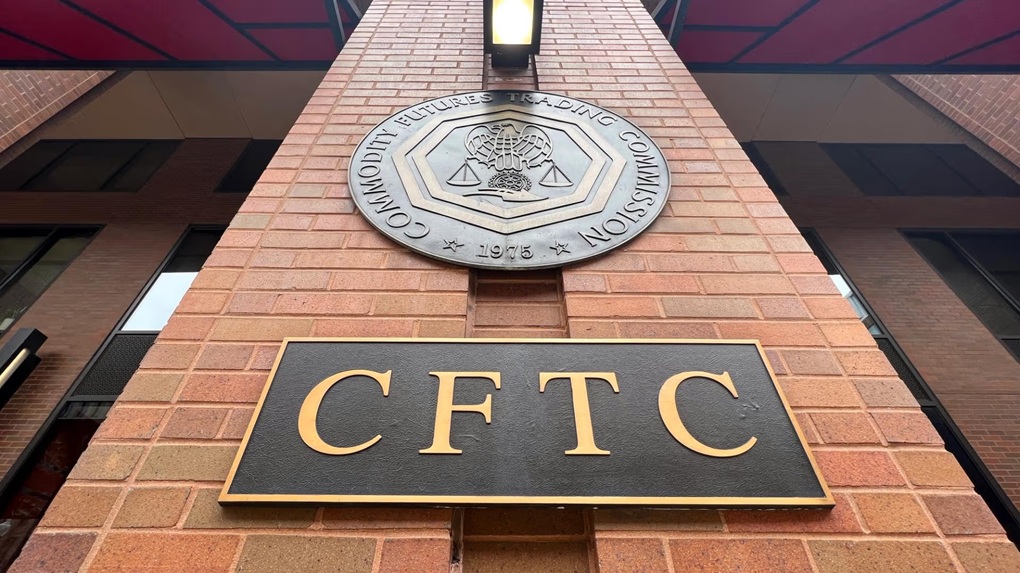
In an advisory issued September 22, the CFTC’s Division of Market Oversight said so-called “mention markets” differ from conventional event contracts because their outcome can sometimes be controlled by a single person or a small group of people.
Most event contracts settle against outcomes generated independently of any one trader, such as election results, economic data or regulated sporting events. Mention markets can work differently. A contract might pay out if a public figure says a particular word during a speech, attends a specified event, appears with another person or performs a particular action.
That structure creates what CFTC staff described as a heightened risk that someone could deliberately influence settlement or trade using advance knowledge of what will happen.
The advisory does not prohibit the contracts outright and does not create a new binding rule. Instead, CFTC staff said there are “limited circumstances” in which a carefully designed mention market could satisfy existing Commodity Exchange Act requirements.
Designated contract markets, or DCMs, are already required under Core Principle 3 to list only derivatives that are not readily susceptible to manipulation. The new guidance tells exchanges that mention markets may require a much stronger showing before they can meet that standard.
The intervention comes as insider trading concerns in prediction markets are attracting attention well beyond the United States. European regulators have separately raised concerns about informed trading, manipulation and wash trading as the sector expands.
Scripts, Guest Lists and Private Information Create an Unusual Trading Advantage
The CFTC identified one particularly difficult feature of these products: people close to the event can sometimes know the answer before everyone else.
A speechwriter may have access to prepared remarks. An employee may know who is scheduled to attend an event. A production team may know what a presenter intends to say. Someone involved in an earnings call may see prepared material before it becomes public.
That creates a very different market structure from traders independently forecasting an uncertain external event.
The agency gave the example of a contract tied to whether a podcast host says a particular catchphrase. The host could potentially trigger the outcome deliberately, while another person might attempt to influence the result by submitting a question or paying for an acknowledgment during the program.
The issue is not theoretical.
In August, the CFTC settled charges against Gabriel Perez, a former White House teleprompter operator who the regulator said used advance access to presidential speeches to trade presidential mention markets on Kalshi.
Perez made more than $107,500 in profits between December 2025 and February 2026, according to the CFTC. He was ordered to disgorge $107,539.02, pay a $65,000 civil penalty and accept a three-year trading ban, bringing the total monetary amount to more than $172,000.
That case followed other concerns around suspicious trading on Kalshi, including an earlier case involving an editor connected to MrBeast’s media business as exchanges increased internal investigations into traders with access to nonpublic information.
George Santos Case Shows Manipulation Can Come From the Person Being Traded On
The CFTC’s warning also addresses a second problem: the person at the centre of the contract may be able to control the outcome themselves.
Former U.S. Representative George Santos agreed to a CFTC settlement in July involving a prediction contract on whether he would attend the 2026 State of the Union address.
The regulator found that Santos traded both sides of the market while making public statements about whether he planned to attend. According to the CFTC, some of those statements contained material misrepresentations or omissions and moved contract prices in ways that benefited his positions.
Santos agreed to disgorge $17,569.98 in profits, pay a $17,500 civil penalty and accept a three-year trading ban.
The case demonstrates why mention and attendance contracts can create a structural problem that ordinary financial markets rarely face so directly: the underlying “asset” can effectively know that people are trading on its own future behavior and may be capable of changing the settlement outcome.
Similar questions have emerged around unusual activity on decentralized platforms. Monitoring services have recently flagged Polymarket wallets with unusually strong winning records, although unusual performance by itself does not establish insider trading or manipulation.
Exchanges May Need Restricted Lists, Position Limits and Insider Screening
The CFTC advisory goes beyond identifying the problem and outlines the controls regulators expect exchanges to consider.
Staff said DCMs should examine whether the person controlling the outcome is constrained by legal, professional, contractual, fiduciary, confidentiality or organizational obligations that would discourage deliberate manipulation.
Exchanges should also assess whether outsiders could pressure or induce that person to affect the result.
Independent verification matters as well. Contracts involving public, easily observable conduct are potentially easier to supervise than bets depending on private interactions or actions that may never receive meaningful public scrutiny.
Most significantly, the CFTC encouraged exchanges to identify people with known relationships to particular contracts and design surveillance around them.
Potential measures include restricted trader lists, third-party screening for relationships between customers and contract subjects, employment-status checks, position limits and warnings requiring traders to confirm that they do not have a relevant connection to the event.
Surveillance systems could also flag accounts that suddenly generate large profits in one narrow category, trade immediately before nonpublic information becomes public or are created and funded shortly before a profitable event.
Those controls increasingly resemble compliance systems used in traditional securities markets rather than the relatively lightweight oversight associated with prediction markets only a few years ago.
Prediction Markets Are Growing Into Financial Infrastructure
The timing matters because prediction markets are no longer a niche corner of online speculation.
Platforms such as Kalshi and Polymarket have expanded into politics, economics, sports and financial markets, while traditional financial firms, data companies and brokers increasingly connect their own customers to event contracts.
Polymarket, for example, recently expanded its relationship with Sportradar to obtain official sports data and integrity services covering more than 20 leagues and competitions.
Greater scale makes market integrity much more important.
A thin prediction market with several thousand dollars of activity can tolerate weaknesses that become unacceptable once institutions, brokers and millions of retail users begin treating its prices as meaningful signals.
Even price discovery itself is still maturing. Recent comparisons have shown large pricing gaps between Kalshi and Polymarket on contracts tied to the same Federal Reserve outcomes, demonstrating that liquidity remains fragmented even as the category expands.
The Advisory Could Change Which Prediction Markets Exchanges Are Willing to List
The biggest implication is that exchanges may become far more selective about contracts controlled by identifiable individuals.
There is an enormous difference between asking whether inflation will exceed 3% and asking whether one person will say the word “recession” during a television interview.
The first outcome emerges from an economic process involving millions of variables.
The second could potentially be changed by one sentence.
That makes mention markets fun for users but difficult for regulators.
An exchange can monitor trading. It can impose position limits. It can investigate suspicious accounts. What it cannot easily do is prevent every individual connected to a contract from knowing something before the public — particularly when the information involved may be as ordinary as seeing a speech draft or guest list.
This is where the CFTC’s approach becomes important.
The regulator is not saying these markets can never exist. It is effectively raising the amount of evidence an exchange may need to provide to show that a particular contract cannot easily be manipulated.
For operators, that increases compliance costs.
Every new market may require more analysis of who controls the outcome, who could possess advance information, how settlement is independently verified and which customers should face additional surveillance or restrictions.
The Bigger Regulatory Fight Is Still Far From Settled
The manipulation debate is unfolding alongside a much larger dispute over who regulates prediction markets in the United States.
The CFTC has argued that federally registered designated contract markets fall under its derivatives jurisdiction. State regulators have countered that some products, particularly sports contracts, function as gambling and should remain subject to state gaming laws.
The courts have not produced a uniform answer.
In August, the Ninth Circuit allowed Nevada to apply its gambling rules to Kalshi’s sports-event contracts, concluding that Kalshi had not shown those products were swaps protected from state regulation under the Commodity Exchange Act. The decision conflicts with other federal court rulings that have been more favorable to Kalshi’s federal-preemption argument.
That split has intensified the broader legal battle over prediction-market regulation.
The new mention-market advisory addresses a different question, but the two issues ultimately meet in the same place.
If prediction markets are going to function as regulated financial markets rather than simply online betting venues, exchanges will increasingly be expected to operate like financial exchanges.
That means surveillance, restricted participants, market-abuse investigations, enforcement cooperation and rules designed around material nonpublic information.
The Perez and Santos cases show why those systems are becoming necessary.
Prediction markets are valuable partly because participants can bring private knowledge and better analysis into prices. But there is a fundamental difference between having a better forecast and already knowing — or controlling — the answer.
As the sector becomes larger, distinguishing between those two things may become one of its most difficult regulatory problems.

Johan Shamshad is a financial markets writer at Dave Finances covering cryptocurrencies, trading platforms, brokers, fintech, financial regulation, and developments across global markets. He previously worked at Gulf News, adding newsroom experience to his coverage of fast-moving financial and digital-asset markets.
His work focuses on identifying market-moving events, company developments, regulatory changes, product launches, and shifts in trading and financial infrastructure.
Johan contributes news and analysis designed to help readers understand not only what happened, but why a development matters and how it may affect the wider financial landscape. You can reach out to him via his social media accounts:
Linkedin: https://www.linkedin.com/in/johan-shamshad-742851262/
X: https://x.com/Yasmine_FX
Investing: https://www.investing.com/members/contributors/279781574